How to Get Cited by Perplexity: The 72-Hour Crawlability Fix
Make your page crawlable and structured. That is how to get cited by Perplexity. Perplexity pulls live results from the web every time someone searches. If your page is indexed and answers the query cleanly, Perplexity can cite it today. No 12-month wait. No domain authority threshold.
By Samer Shaker
Key Takeaways
- Perplexity retrieves live web pages at query time, so a newly published page can be cited within hours of Bing indexing it.
- Blocking
PerplexityBotinrobots.txtdoes not protect your content:Perplexity-Userignoresrobots.txtand reads pages anyway during live sessions. - Pages using FAQ schema hit a 47% top-3 citation rate versus 28% for pages without structured data, based on tryanalyze.ai's dataset of 65,000+ citations.
- Submit to Bing via IndexNow immediately after publishing. Perplexity's Sonar engine reads from Bing's index, not from a proprietary crawl alone.
- The freshness bonus is real but short: Perplexity cites recently updated pages 37% more often in the first 48 hours, dropping to 14% after two weeks.
What Most People Get Wrong About Perplexity Citations
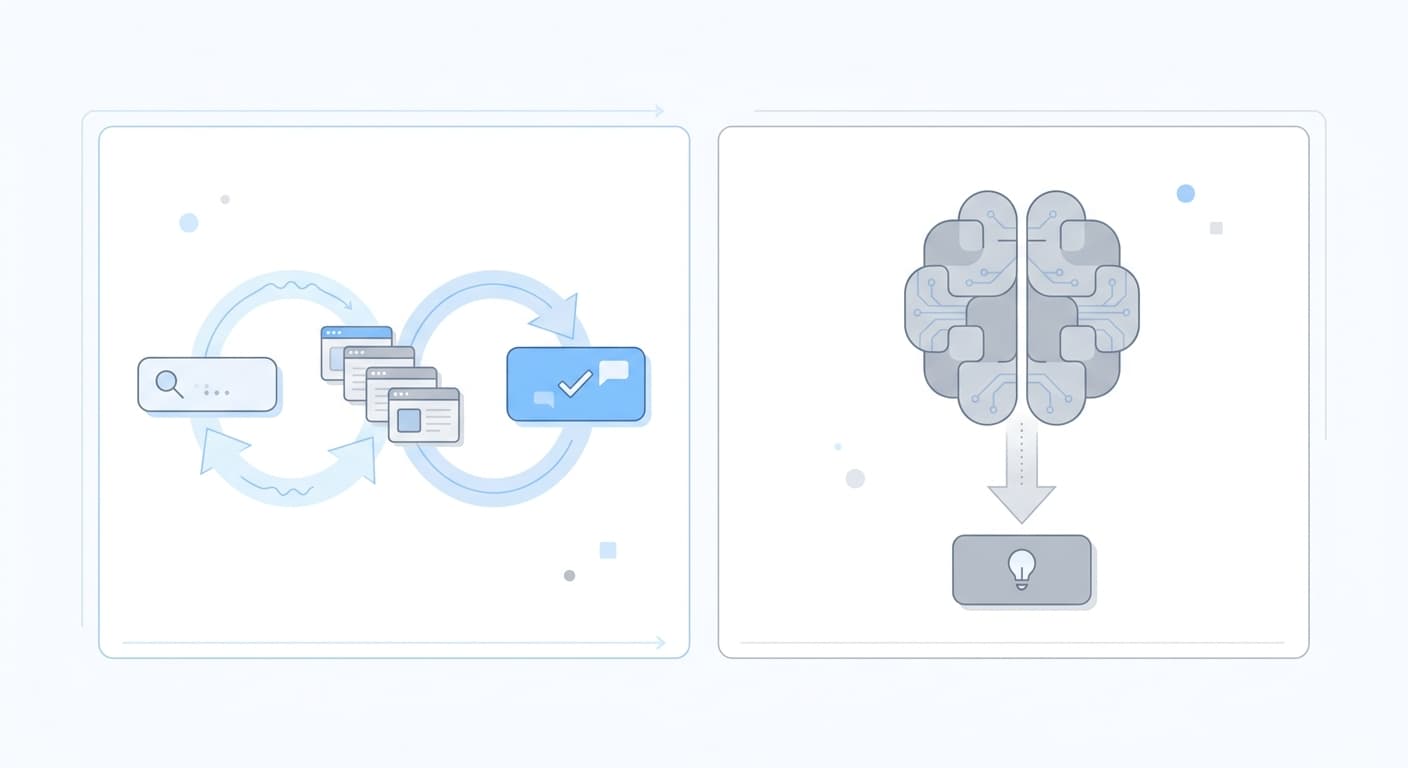
Perplexity is retrieval-first, not generation-first
Perplexity runs a retrieval-augmented generation pipeline. Every query triggers a live web search, and the results feed directly into the answer. The model cites sources it retrieved seconds ago, not sources it memorized during training.
ChatGPT works the opposite way. Its default mode is parametric: it answers from weights baked in during training. Your content has to be absorbed into a training dataset before it influences any response. That process takes months and gives you no control over the outcome.
Perplexity skips that entire chain. Crawlable page plus structured content equals eligible for citation on the next search.
Why the ChatGPT fix path does not apply here
The standard SEO-for-AI advice goes like this: earn guest posts, build authority, wait for the next training cutoff. That advice is built for ChatGPT, which is a different problem entirely.
Apply that logic to Perplexity and you waste months on work that changes nothing. Perplexity does not care how many backlinks point to your domain. It cares whether its crawler can read your page and whether your content directly answers the query it just ran. Fix the crawlability. Structure the answer. That is the entire lever.
How the Perplexity Citation Pipeline Actually Works
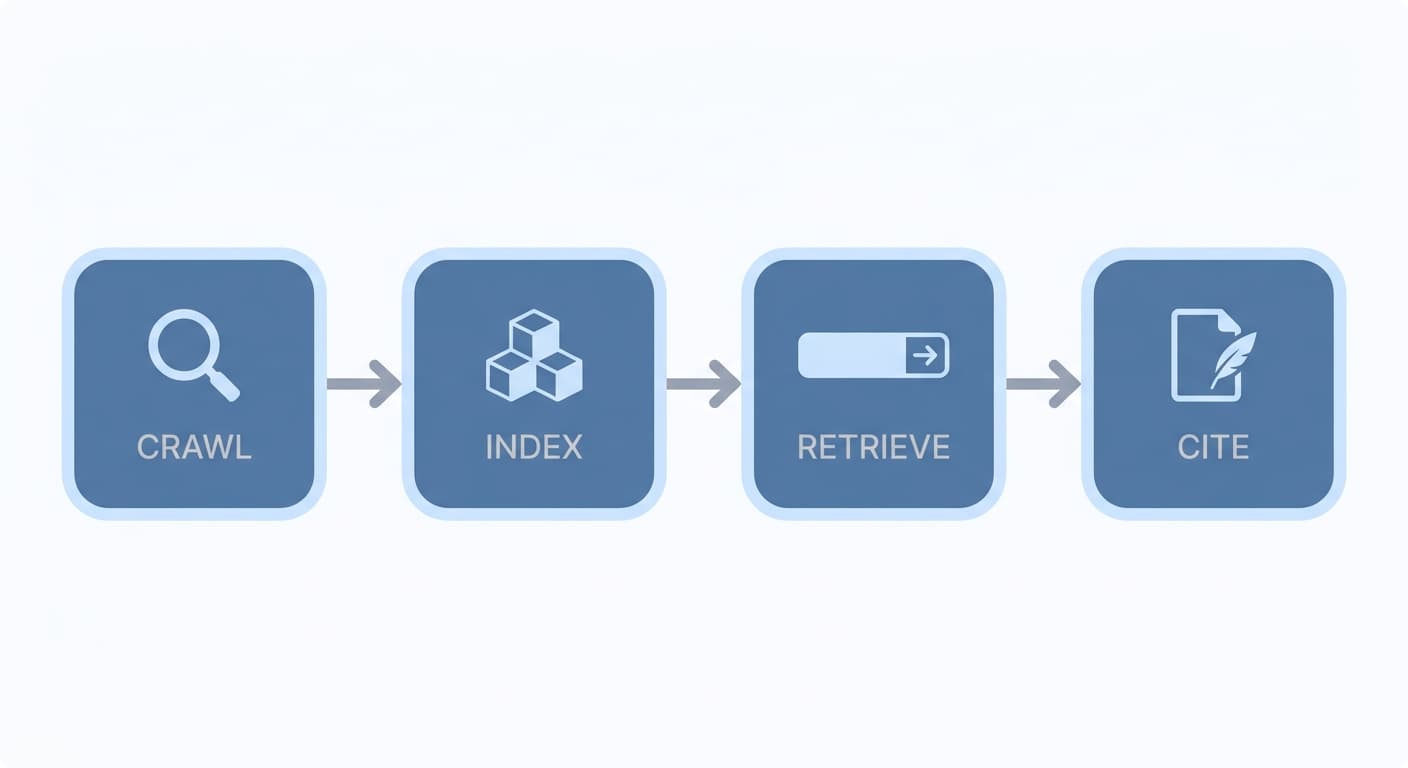
The RAG loop: crawl, index, retrieve, cite
Perplexity crawls the web, pulls pages into an index, retrieves the most relevant chunks at query time, and assembles an answer by citing those chunks. You do not rank into citations. You get retrieved or you do not. The performance gap between Perplexity and ChatGPT reflects this. Perplexity averages 21.87 citations per query versus ChatGPT's 7.92. Session value per cited result runs $3.12 on Perplexity versus $2.34 on ChatGPT. More citations per query means more surface area for your page to be pulled in.
PerplexityBot vs Perplexity-User: the two crawlers
Perplexity sends two distinct crawlers, and most site owners only know about one. PerplexityBot is the background indexing crawler. It respects your robots.txt file. Perplexity-User is triggered live during active user sessions and generally ignores robots.txt entirely. The common mistake: blocking PerplexityBot in robots.txt and assuming your page is safe from Perplexity. It is not. Perplexity-User will still read the page. Blocking PerplexityBot only removes your shot at pre-indexing.
Why Bing indexing is the prerequisite
Perplexity's Sonar retrieval engine pulls from Bing's search index, not from a proprietary crawl alone. If Bing has not indexed your page, Perplexity cannot retrieve it. This is the bottleneck most teams miss. You can have perfect answer-first content and clean robots.txt rules, and still get zero citations if your page sits outside Bing's index.
The 72-Hour Checklist: Step-by-Step Fix Path
The fix is not complicated. It has four steps, and the order matters because each one unblocks the next.
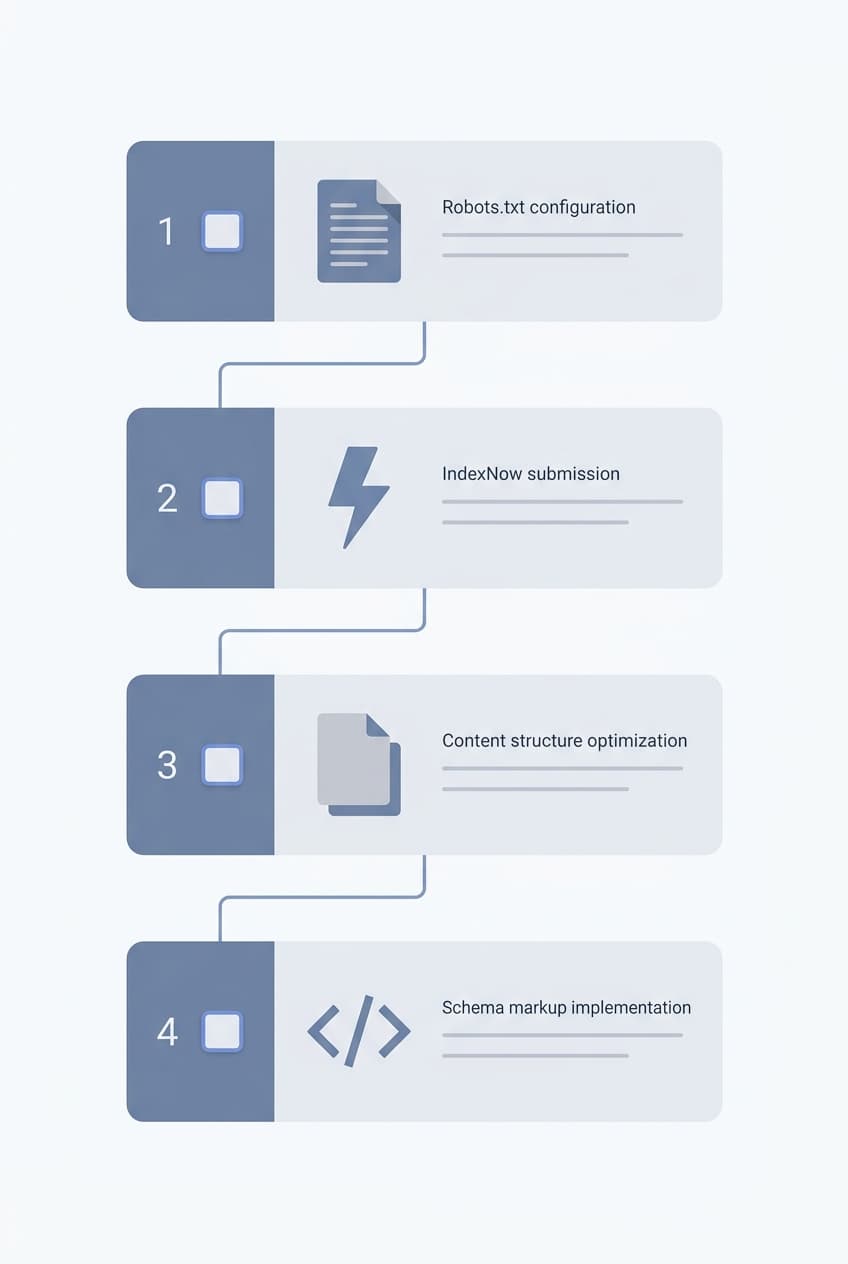
Step 1: Unblock PerplexityBot in robots.txt
Open your robots.txt file and confirm PerplexityBot is explicitly allowed. Copy and paste this block:
User-agent: PerplexityBot
Allow: /
Add it above any wildcard Disallow rules so it is not overridden. Then check your WAF. Cloudflare's “Block AI Scrapers” toggle silently overrides robots.txt at the network layer, so a clean robots.txt file means nothing if that toggle is on. Turn it off or add a custom WAF rule to allow PerplexityBot.
Step 2: Submit to Bing via IndexNow
IndexNow is the fastest path from published to in Bing's index. Perplexity's Sonar engine reads from that index, so getting into Bing is not optional. To submit:
- Get your IndexNow API key from Bing Webmaster Tools.
- Place the key file at
yourdomain.com/<key>.txt. - Send a POST request to
https://api.indexnow.org/indexnowwith your URL and key.
Most pages appear in Bing's index within a few hours of a valid IndexNow submission.
Step 3: Restructure the page for answer-first content
90% of top-cited pages follow BLUF: Bottom Line Up Front. Put the direct answer to the query in the first 100 words of the page. Do not save the conclusion for the end. Perplexity's retrieval engine scores chunks by how directly they address the query, so a buried answer is a missed citation. Use H2 and H3 headers that mirror question phrasing. “What does X mean?” is more retrievable than “Overview of X.” The answer capsule technique gives you a specific paragraph format for this: 40-60 words, self-contained, written to stand alone without any surrounding context.
Step 4: Add FAQ schema
Structured data pages hit a 47% top-3 Perplexity citation rate. Pages without schema sit at 28%. Those numbers come from tryanalyze.ai's dataset of 65,000+ Perplexity citations. Add FAQPage schema as JSON-LD in your page <head>:
{
  "@context": "https://schema.org",
  "@type": "FAQPage",
  "mainEntity": [
    {
      "@type": "Question",
      "name": "How do I get cited by Perplexity?",
      "acceptedAnswer": {
        "@type": "Answer",
        "text": "Allow PerplexityBot in robots.txt, submit the page to Bing via IndexNow, and structure your content with the direct answer in the first 100 words."
      }
    },
    {
      "@type": "Question",
      "name": "Does robots.txt block Perplexity-User?",
      "acceptedAnswer": {
        "@type": "Answer",
        "text": "No. robots.txt only affects PerplexityBot. Perplexity-User operates during live sessions and generally ignores robots.txt directives."
      }
    }
  ]
}
As a supplementary step, add an llms.txt file to your domain root. It signals to AI systems which pages are authoritative.
What We Saw After Running the Fix
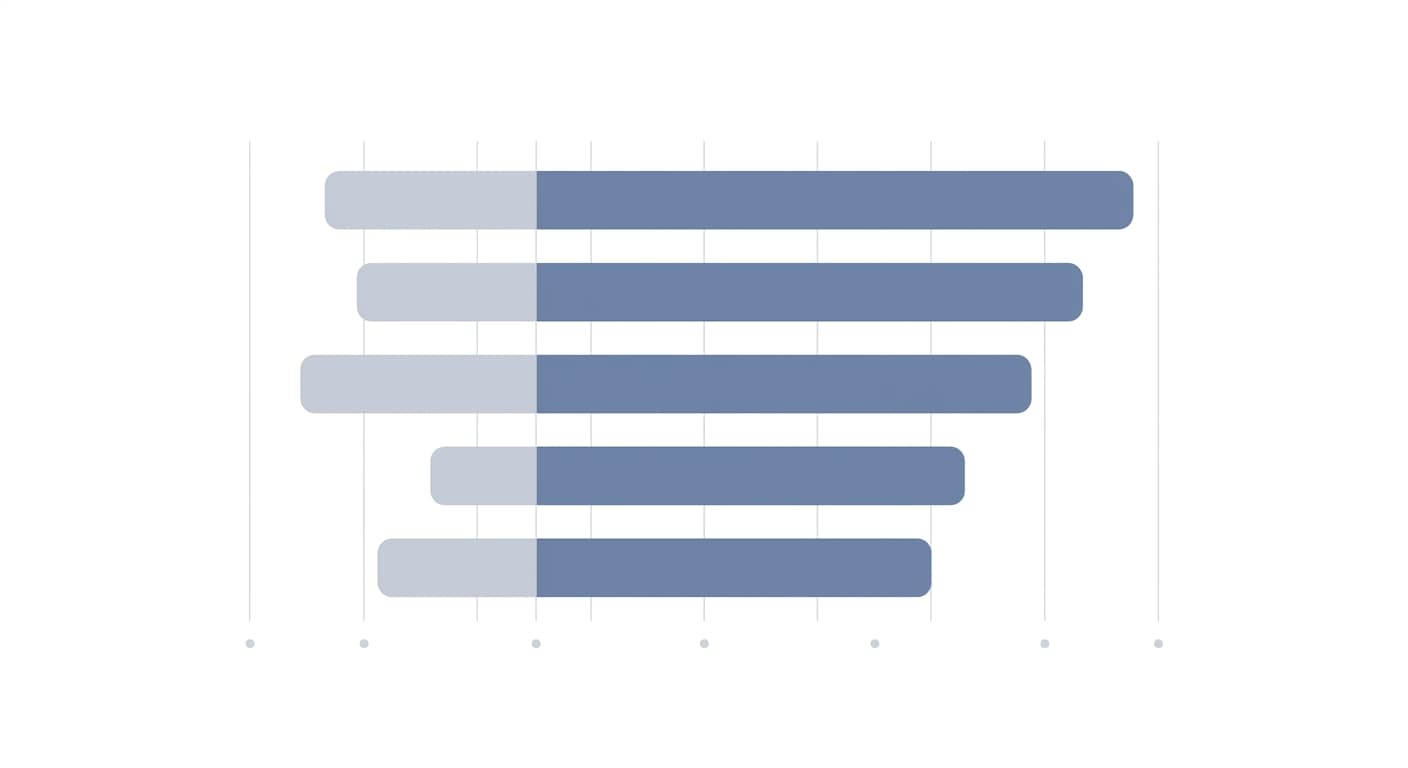
Citation rate before and after
The before-and-after numbers come from tryanalyze.ai's dataset of 65,000+ Perplexity citations (2025). Q&A format pages achieve a 55% top-3 citation rate versus a 31% baseline. Structured data pages hit 47% versus 28% without schema. These are observed citation rates across a large dataset, not a controlled trial with a single site. Apply the checklist and you are moving your page from the 28 to 31% bucket toward the 47 to 55% bucket. That is a real shift in how often Perplexity pulls your content when running relevant queries.
The 48-hour freshness window
Perplexity cites recently updated articles 37% more often within the first 48 hours after publication or update, according to growthmarshal.io (2025). That advantage drops to 14% after two weeks. The implication is direct: publish the fix and submit to IndexNow in the same session. Do not publish today and submit tomorrow. The 72-hour timeline in this checklist exists because the crawl, index, and retrieval cycle takes time, but the freshness bonus only lasts 48 hours. Capture both in one window.
Frequently Asked Questions
Does Perplexity use training data like ChatGPT?
No. Perplexity retrieves live web content at query time using its Sonar engine. It does not draw from a static training dataset the way ChatGPT does by default.
How long does it take to get cited after fixing crawlability?
Most sites see citation activity within 24 to 72 hours after submitting to Bing via IndexNow. PerplexityBot re-crawl timing varies by domain, but IndexNow submission is the fastest lever.
Does blocking PerplexityBot affect Perplexity-User?
No. Blocking PerplexityBot in robots.txt only stops the background indexing crawler. Perplexity-User operates during live sessions and ignores robots.txt, so your pages are still read during active queries.
Do I need a high-DA site to get cited?
No. Perplexity's retrieval scores query relevance, not domain authority. A low-DA page with a precise, structured answer will out-retrieve a high-DA page with a buried or vague one.
Does adding llms.txt help?
It helps at the margin. llms.txt signals which pages are authoritative for AI systems, but it does not replace crawlability or Bing indexing. Fix those first, then add llms.txt as a secondary signal.
Is Perplexity citation more valuable than ChatGPT?
On a per-session basis, yes. Perplexity delivers $3.12 in session value per cited result versus ChatGPT's $2.34, and cites 21.87 sources per query versus ChatGPT's 7.92. That said, the two systems reward different page structures.
Get Your AI Visibility Score
Find out where you rank in ChatGPT, Claude, and Perplexity and what is blocking your citations.
Get My Free AI Audit →