How to Evaluate Any AI Solution Before You Buy
Every week there's a new AI tool promising to transform your business. Most of them won't. Not because the technology is bad, but because nobody stops to ask the right questions before buying.
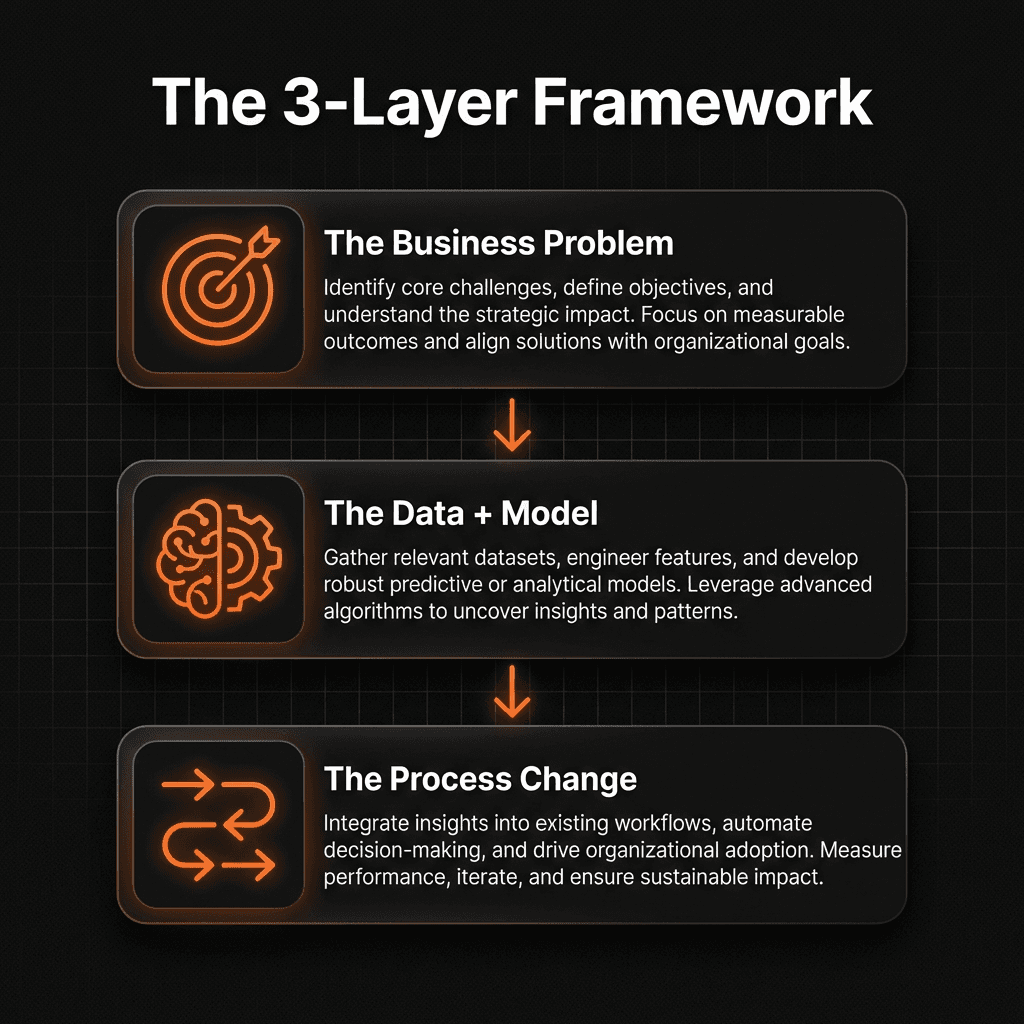
This post gives you a simple mental model: three layers that every real AI solution should have. Think of it as a checklist you can run in your head whenever someone pitches you an AI product, or when you're browsing tools on your own. If any layer is missing, the solution probably isn't ready.
By Samer Shaker
Layer 1: The Business Problem
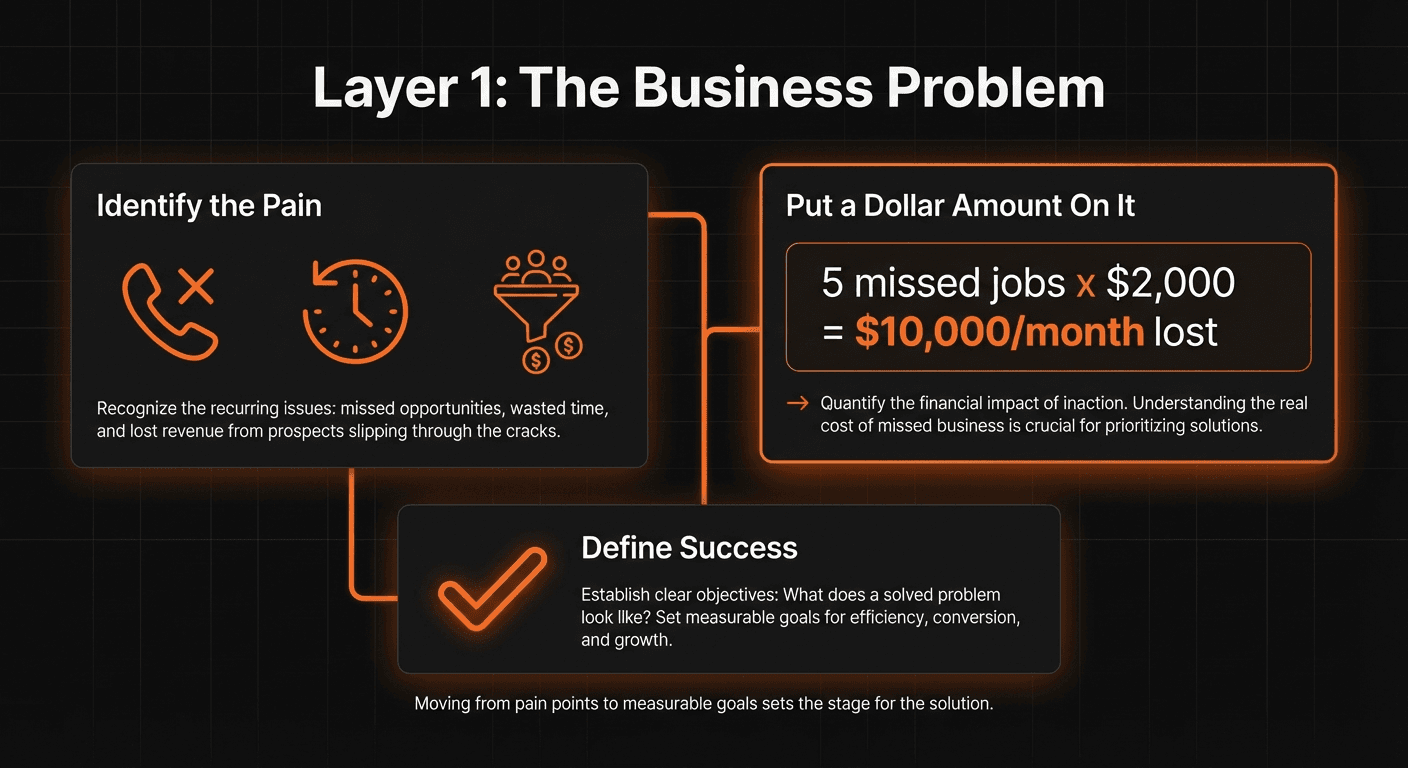
Before you look at any AI tool, answer one question: What business problem are we solving?
Not “what cool technology exists.” Not “what are our competitors doing.” What specific, measurable problem is costing you money right now?
- You miss phone calls while you're on a job and never call the lead back
- You're chasing one lead and forget to follow up with three others
- You don't have time to respond to every inquiry, so potential customers go to your competitor
- You can't tell which leads are serious buyers and which are just shopping around
Any AI solution worth considering should start here. If it doesn't connect to a real problem you can describe in plain English, it's not for you yet.
Layer 2: The Data + Model
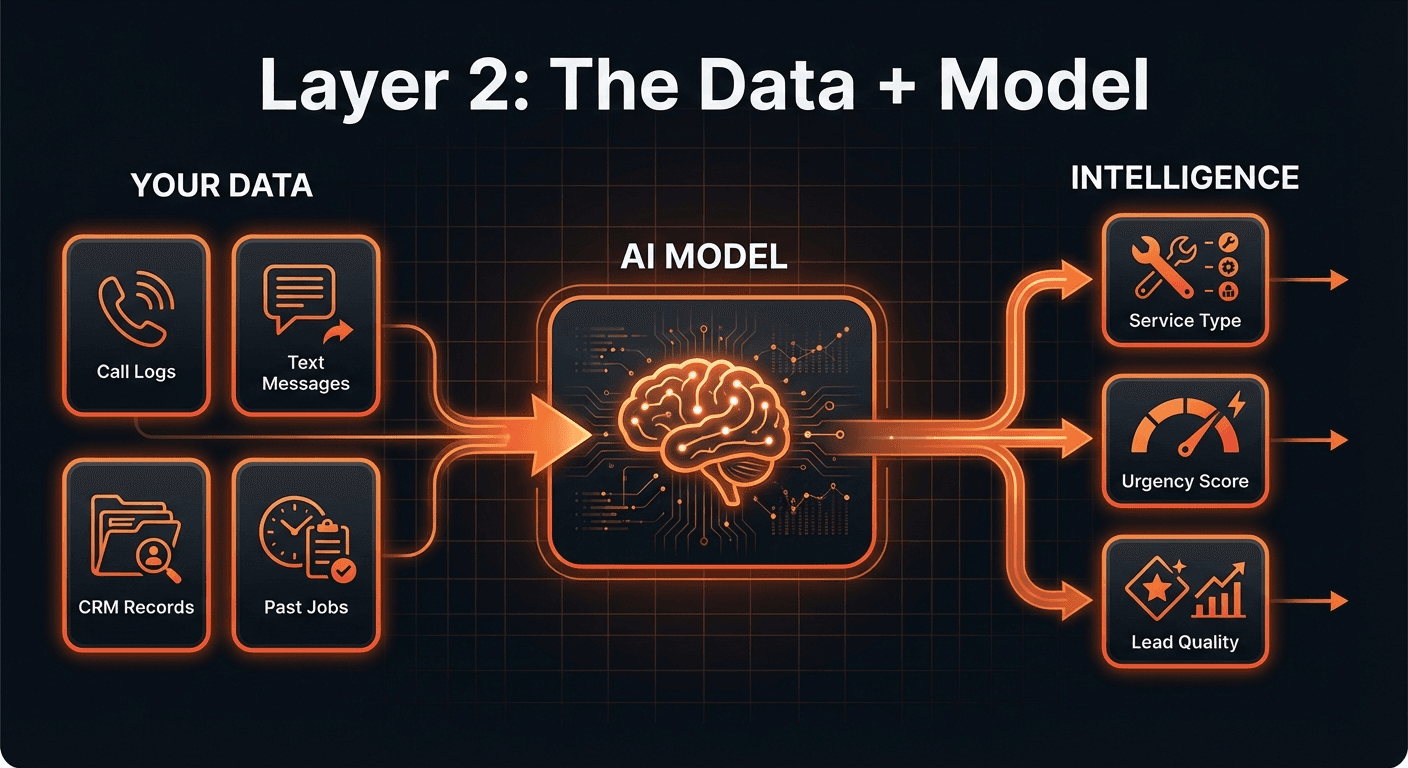
Once you've nailed the business problem, the next question is: What data do we have, and what can AI do with it?
This is where the technology lives, but it should serve the business problem, not the other way around.
Let's use lead follow-up as a concrete example. You've identified the problem: leads come in from your website, Google, and referrals, but you're too busy on jobs to respond quickly. By the time you call back, they've already hired someone else.
Your data
You have months (maybe years) of leads sitting in your CRM, your call log, and your text messages. Which ones turned into jobs? How fast did you respond? What did you say? That history is your training data.
The model
AI looks at an incoming lead, figures out what service they need, how urgent they are, and whether they match the profile of past customers who actually booked. A homeowner texting “water heater is leaking everywhere” gets treated differently than someone asking “thinking about remodeling my bathroom next year.”
You don't need to understand the technical details. You need to understand that the AI is learning patterns from your existing data to make decisions you currently make manually (or don't make at all because you're busy).
Layer 3: The Business Process Change
This is the layer that gets skipped most often. And it's the one that determines whether your AI investment actually pays off.
How does your day-to-day workflow actually change?
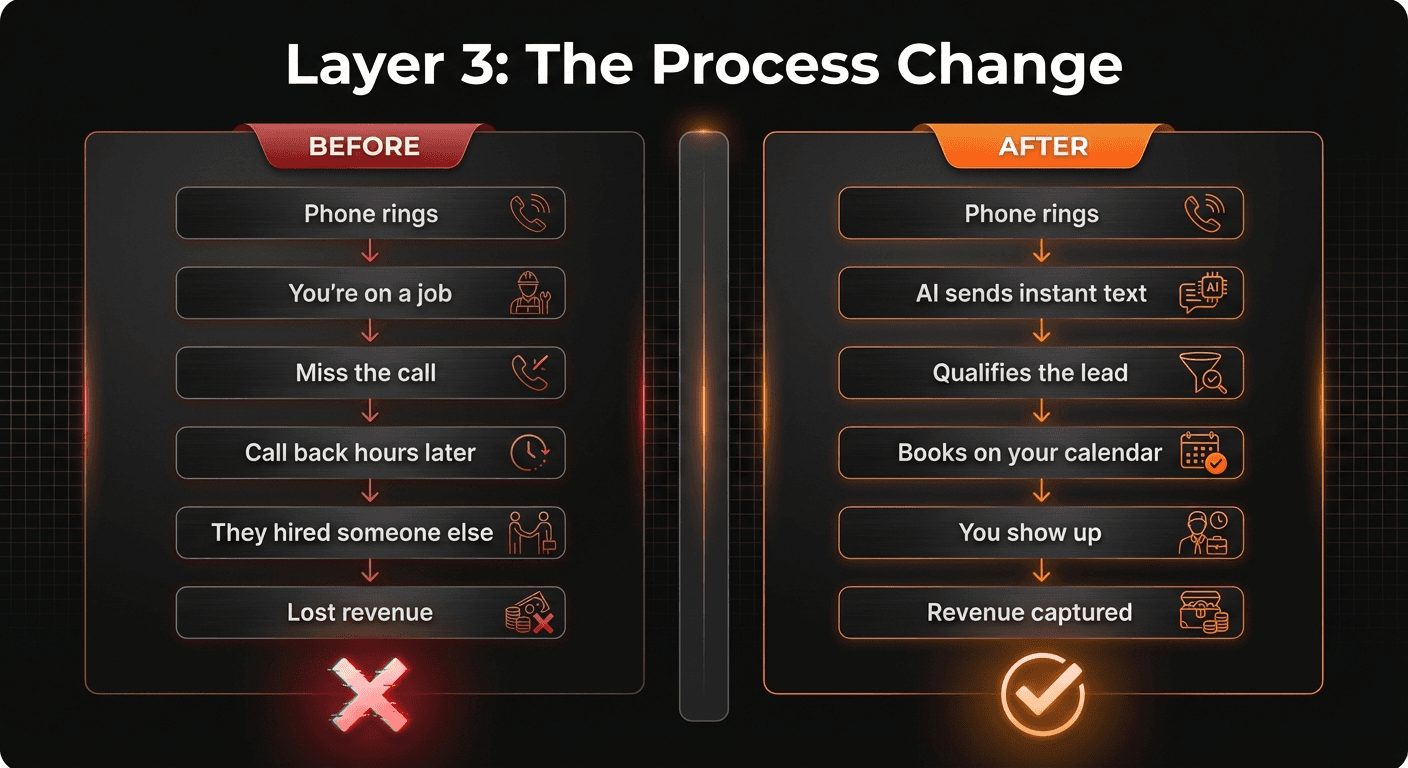
The technology is the middle part. But the business value lives in the workflow change. You stop losing jobs because you were too busy to pick up the phone. Your calendar fills up with qualified leads instead of tire-kickers.
This is also where the human element matters. You still need to review what's working. When the AI misreads a lead, someone corrects it, and the system gets smarter over time.
The Evaluation Cheat Sheet
Here's a practical tool you can use to evaluate any AI solution. Four questions, in order:
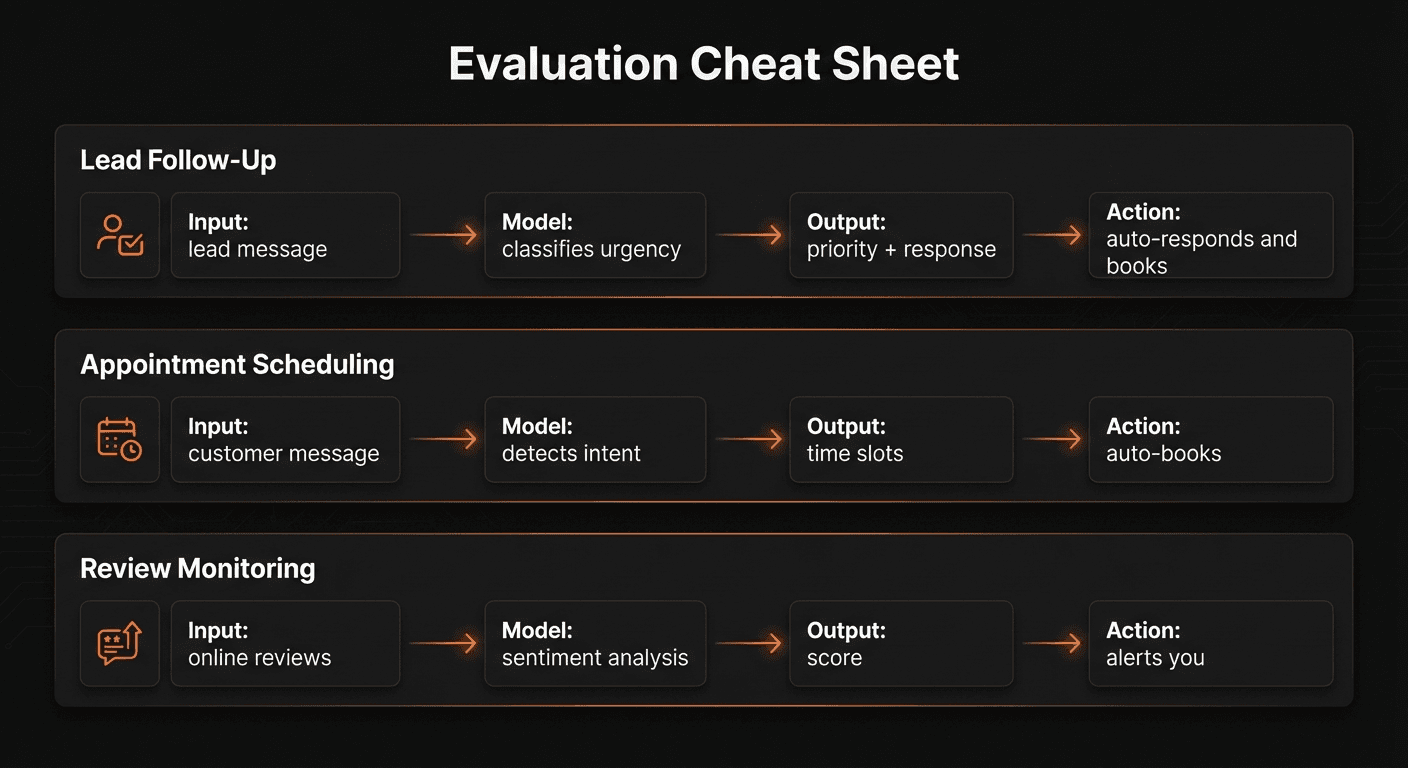
If you can't fill in all four columns for your specific situation, the solution isn't ready for you.
Why AI Projects Fail
Most AI projects don't fail because the technology doesn't work. They fail because someone bought Layer 2 (the model) without thinking about Layer 1 (the actual problem) or Layer 3 (the workflow change).
Common reasons AI tools end up collecting dust:
- The problem wasn't clearly defined, so no one knew what success looked like
- The data wasn't there or wasn't clean enough to train on
- Nobody planned for how the daily workflow would actually change
- There was no plan for monitoring and improving the system over time
The 3-Layer Framework forces you to think through all of it before you spend a dollar.
The Bottom Line
Next time you're looking at an AI solution, run it through these three layers:
- Business Problem: What specific, measurable problem does this solve?
- Data + Model: What data does it need, and what does the AI actually do?
- Process Change: How does my day-to-day workflow change?
If all three layers are solid, you might have a real solution. If it only covers Layer 2 (the tech), keep looking.
AI is a tool. A powerful one. But tools only matter when they solve real problems and fit into real workflows. Everything else is a demo.
Want help figuring out if AI makes sense for your business?
Book a free strategy call. We'll walk through the framework together and see where AI can actually move the needle. No pressure, no jargon, no pitch.
Book a Free Strategy Call →