AI Agents vs Workflows: Why You're Probably Buying the Wrong One
Pick the wrong one and you pay twice: once for a build that costs ten times more than it should, and again when it fails in front of a client. The choice between an AI agent and a workflow is not about which is smarter. It is about who picks the steps.
By Samer Shaker
The difference every vendor blurs comes down to one thing: who picks the steps. A workflow runs the steps you defined, in the order you set. An agent decides its own steps while it runs. That is why agents cost roughly 10x more and fail far more often, because every step is a fresh, fallible AI decision. So the real question isn't which is smarter. It's whether your task runs the same steps in the same order most of the time. If it does, you want a workflow, and most vendors will still try to sell you an agent.
Workflow or Agent: The Difference Is Who Picks the Steps

Anthropic draws the cleanest line. In its Building Effective Agents guide, a workflow is a system where models and tools run through predefined code paths. An agent is a system where the model dynamically directs its own process and decides which tools to use. One follows a script you wrote. The other writes the script as it goes.
That sounds like a small distinction. It is the whole ballgame for cost and reliability. A workflow calls the model where you tell it to, then runs normal code for everything else. An agent calls a large model again at every decision point, so the same task can cost around 10 times more than a plain API workflow, according to IntuitionLabs. Anthropic's own advice is blunt: find the simplest solution first, and only add agent complexity when it clearly beats the simpler option. For many jobs, a single optimized model call with good retrieval is enough.
We build both at iMakeMVPs. The honest answer for most tasks a firm wants to automate is the cheaper one. Here is how to know which task you actually have.
The 10-Step Math That Quietly Kills Agents
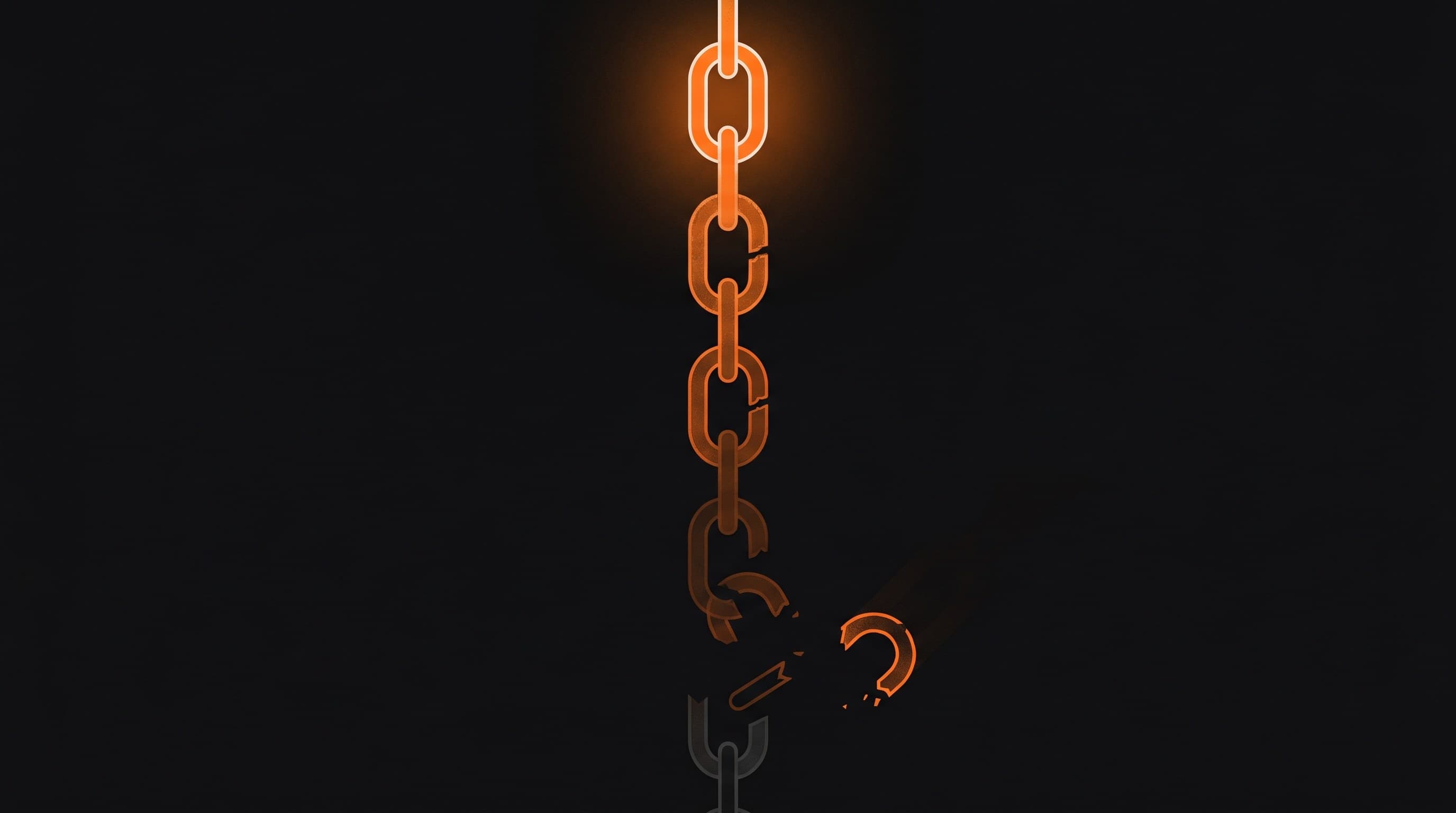
Agent reliability does not average across steps. It multiplies. Each step's output becomes the next step's input, so one early mistake poisons everything downstream. The math is p to the power of n, not a friendly average.
Run the numbers. At 95% accuracy per step, a 10-step task succeeds only about 59% of the time. Push it to 20 steps and you are at 36%. Drop per-step accuracy to 85%, which is generous for many real agent tasks, and a 10-step job lands right only about 20% of the time. Patronus AI found that a 1% per-action error rate compounds to a 63% cumulative failure rate by step 100.
Now map that to real work. Invoice reconciliation, contract review, and client intake are not 3-step tasks. They are 12 to 20 steps once you count every lookup, check, and handoff. An agent running those steps end to end is a coin flip at best.
The benchmarks back up the math. On Carnegie Mellon's TheAgentCompany test, which simulates a small software firm, the best agent completed only 30.3% of tasks autonomously. GPT-4o managed 8.6%. Salesforce's CRMArena-Pro found leading agents succeed on 58% of single-turn tasks but only about 35% on multi-turn work. A workflow does not have this problem. You wrote each branch, so each step runs at near-100% reliability, and it only breaks on inputs you did not plan for, which you can see and fix.
Before You Build: 88% of Agent Pilots Never Ship

Reliability is only half the risk. The other half is whether the thing ever reaches a real workflow. IDC found that 88% of AI proof-of-concepts never reach production: for every 33 launched, only 4 graduate. MIT's GenAI Divide report put it harder, finding about 95% of enterprise pilots delivered no measurable profit impact. Gartner expects more than 40% of agentic AI projects to be canceled by 2027 over cost, unclear value, and weak controls.
There is a trap inside those numbers. Gartner estimates only about 130 vendors offer genuine agentic features out of the thousands that claim to. The rest is "agent washing": a chatbot or an RPA script rebranded as an agent and priced like one. So when a vendor pitches you an "AI agent," the most likely truth is that you are being sold a workflow in a costume, at agent prices.
Treat the production gap as a decision input, not a footnote. Assume a realistic success ceiling before you commit. If your ambitious agent build lands in the 88%, the boring workflow you skipped would have shipped in week one. MIT found one more thing worth holding onto: buying scoped solutions from specialized partners succeeds about 67% of the time, while in-house moonshot builds succeed about a third as often. Picking that partner is its own minefield now that AI is killing the strategy-deck kind of consulting: you want a builder who ships outcomes, not one who bills hours.
Free Assessment
Not sure if your task needs an agent or a workflow?
We map your task on a call, run the step math, and tell you the cheaper architecture that still works. No vendor on the other side.
Book a Free Automation AssessmentThe 7-Question Checklist: Workflow or Agent?
You do not need an engineer to make this call. You need a whiteboard and five minutes. Answer these seven questions about the task in front of you. Most "yes" answers point one way.
- Can you whiteboard every branch of the task in under an hour? Yes means a workflow. If you can draw it, you can code it as fixed paths.
- Does the task run the same steps in the same order most of the time? Yes means a workflow. Sameness is the whole case for determinism.
- Would a wrong intermediate step create financial, legal, or client-trust damage? Yes means a workflow. You want a system you can test and audit, not one that improvises.
- Is the input predictable, like a form, a file type, or a database record? Yes means a workflow. Predictable inputs do not need a model deciding what to do with them.
- Would you have to explain to a regulator or a client exactly why the system did what it did? Yes means a workflow. Agent reasoning is hard to reconstruct after the fact.
- Is per-task cost or speed a constraint at volume? Yes means a workflow. Agents pay a large-model tax on every step.
- Does the task truly need open-ended judgment across unpredictable inputs with no fixed path? Only a clear yes here, with mostly "no" above, puts you in agent territory.
If you answered yes to questions 1 through 6, build the workflow. If question 7 is the only strong yes, an agent is worth scoping. Anything in between starts as a workflow and earns its way to an agent later. That sequence is the next section.
Where Agents Actually Earn Their Keep
Agents are not a scam. They are the expensive specialist, not the default hire. They win when the path genuinely cannot be set in advance: triaging messy unstructured tickets where every case differs, research across sources you cannot list ahead of time, or dynamic tool selection where the right next move depends on what the last move returned. In those jobs a fixed workflow would need a branch for situations you cannot enumerate, and that is exactly when handing the model the wheel pays off.
One caution if you do go agentic: keep it single-threaded. Cognition's Walden Yan, writing on why his team does not build multi-agents, put it plainly: "Actions carry implicit decisions, and conflicting decisions carry bad results." Splitting work across many agents sounds powerful and usually backfires, because context does not transfer cleanly between them. Research on decentralized multi-agent setups found they amplify errors more than 17x versus a single agent. When you need an agent, you need one good one, not a swarm.
This is also where an honest builder matters. AI agent orchestration is a real discipline, but it is not the answer to every problem, and anyone who tells you it is has something to sell.
The Upgrade Path: Ship the Workflow First, Add the Agent Later
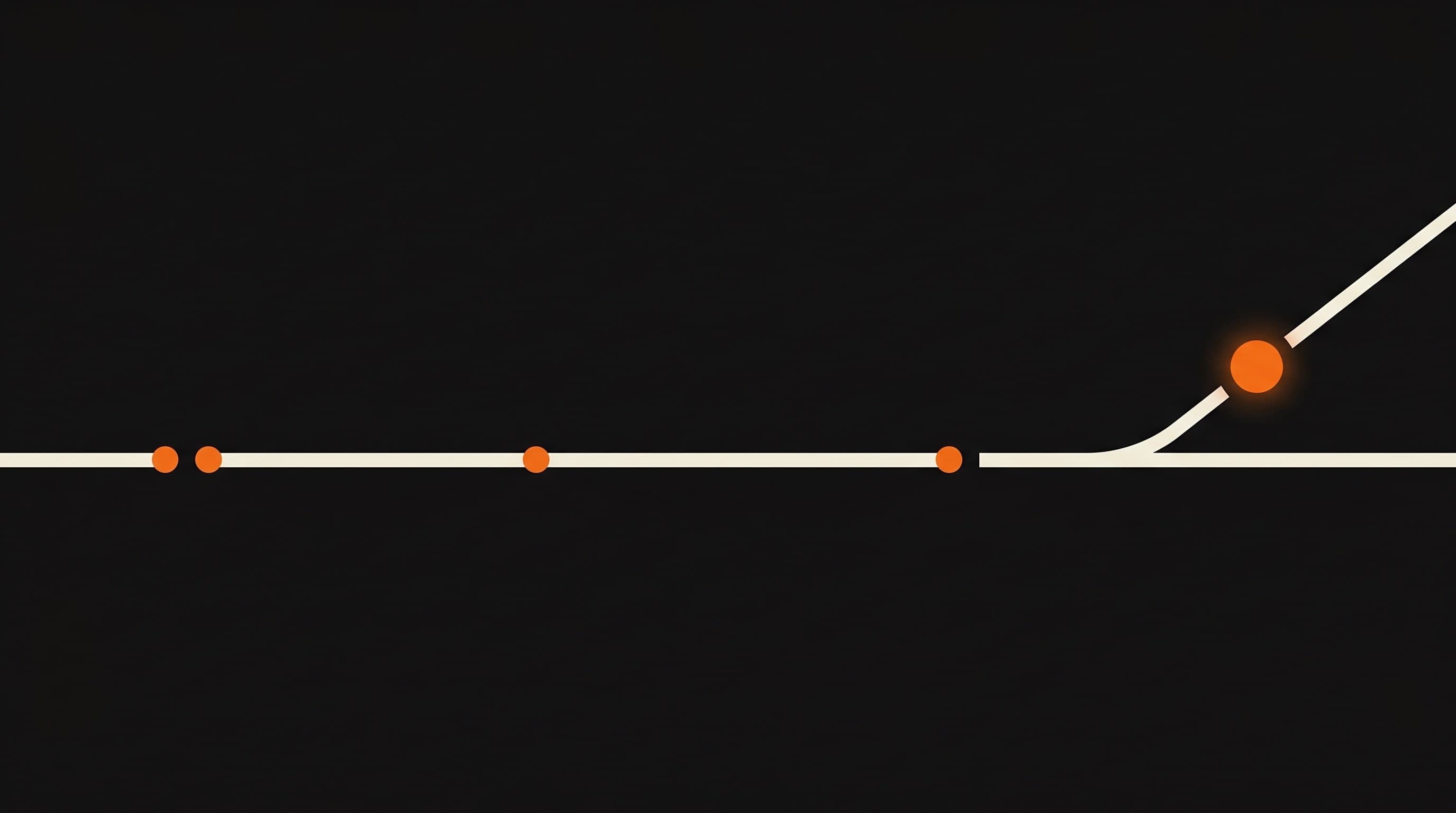
The teams that actually reach production rarely start with an agent. They start deterministic and add intelligence where the data proves they need it. deepset frames workflows and agents as a spectrum, not a binary, and recommends building on deterministic foundations first, then adding agentic complexity only where it measurably improves the outcome.
Here is the phased path in plain terms. Phase 1: ship a workflow that handles the 80% of cases that follow the standard route. Client intake is a good example. A workflow collects the form, requests the files, validates them, and routes the handoff with no model deciding anything it does not have to. Phase 2: watch where the workflow gets stuck, which is usually the weird 20% a human used to triage by hand. Scope a narrow agent for just those escape hatches. Now you are paying agent prices only on the slice of work that genuinely needs judgment.
That sequence is also the safest way to spend a budget. You get a working result in week one instead of a science project, you keep the option to add an agent open, and you never bet the whole initiative on the architecture with an 88% washout rate. If you want help deciding what to automate first, that is the same logic behind a sound AI implementation roadmap: start with the highest-value task that has a clear input and output, prove it, then expand.
Frequently Asked Questions
What is the difference between an AI agent and a workflow?
A workflow runs a fixed set of steps in an order you defined, using code paths you control. An AI agent decides its own steps at runtime, choosing what to do next based on the model's judgment. The practical difference is cost and reliability: a workflow's steps are deterministic and near-100% reliable, while every agent step is a fresh AI decision that can be wrong, and those errors compound across the task.
When should I use an AI agent instead of a workflow?
Use an agent only when the task genuinely cannot follow a fixed path: the inputs are unpredictable, the steps change every time, and the work needs open-ended judgment a human would normally do case by case. If you can whiteboard every branch of the task in under an hour, or it runs the same steps most of the time, a workflow will be cheaper, faster, and more reliable.
Why do AI agents fail so often in production?
Agent errors compound multiplicatively. At 95% accuracy per step, a 10-step task succeeds only about 59% of the time, and at 85% per step it drops to roughly 20%. On Carnegie Mellon's TheAgentCompany benchmark, the best agent finished only 30.3% of multi-step office tasks. IDC found 88% of AI proof-of-concepts never reach production at all.
Are AI agents worth it for a small firm?
For most repeatable business tasks, no. A workflow automation handles invoicing, intake, reminders, and document routing more reliably and at roughly a tenth of the cost, because each agent reasoning step requires a fresh large-model call. Agents earn their keep on a narrow set of tasks with truly unpredictable inputs and no fixed path. The cheapest correct answer is usually a workflow.
Can I start with a workflow and upgrade to an agent later?
Yes, and that is how teams that actually reach production operate. Ship a deterministic workflow first, instrument it, find the 20% of cases it cannot handle, then scope a narrow agent only for those escape hatches. You get a working result in week one and you only pay for agent complexity where it measurably earns it.
We Build Both. We Will Tell You Which One You Actually Need.
Bring us the task. We run the step math, weigh the cost, and recommend the workflow or the agent that ships and holds up. No agent upsell, no vendor on the other side.
Book a Free Call