AI Chief of Staff for Business Owners: Close the Fortune 500 AI Gap
Enterprise AI adoption sits at 87%. Small business adoption sits at 34%. That gap is not closing on its own. The difference is not budget. It is a dedicated operator that carries context, learns your business, and compounds every week.
By Samer Shaker
Fortune 500 Companies Have Had This for Years
An AI Chief of Staff for business owners is not a chatbot. It is a managed service. iMakeMVPs builds and runs it for you. We set up the systems, maintain the context layer, and keep everything improving week over week. You get the output of a dedicated senior operator without adding a full-time hire.
Fortune 500 companies understood this fast. In 2025, 26% of large organizations had appointed a Chief AI Officer. By 2026, that number hit 76%, according to the IBM 2026 CEO study.
The gap it created is brutal. Enterprise AI adoption sits at 87%. Small business adoption sits at 34%. That is a 53-point spread, and it is widening every quarter, per SecondTalent's enterprise vs. SMB adoption data (2025).
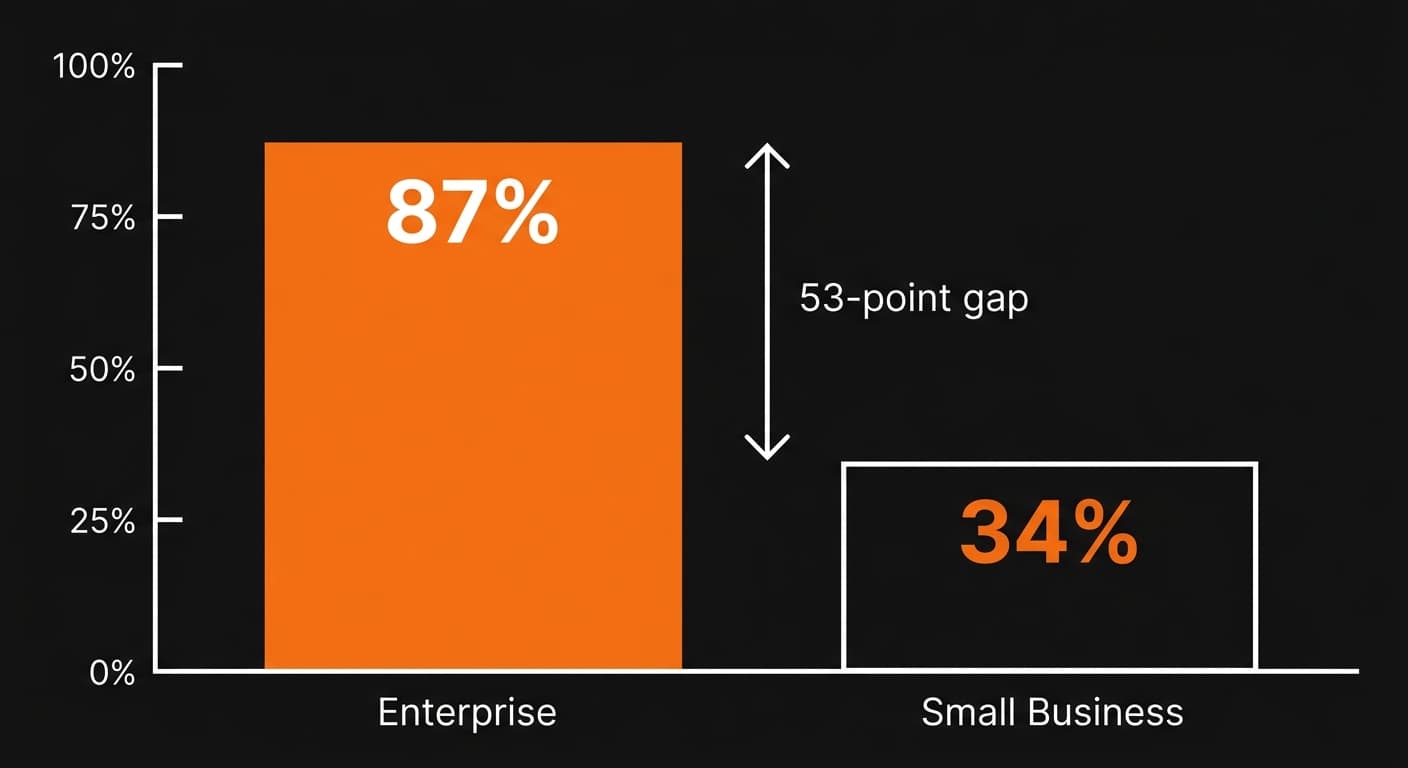
The spending gap is just as stark. Large enterprises invest $6.5 million per year in AI on average. The median small business spends $28 per month, according to JPMorgan Chase Institute research (2024). Meanwhile, Fortune 500 companies grew AI governance and operator roles 400 to 600 percent faster than AI builder roles. They are not just buying tools. They are building the layer that makes tools produce results.
So where does that leave you?
What an AI Chief of Staff Actually Does
Most AI tools are stateless. Every session starts from zero. You re-explain context, repeat yourself, and get generic output. An AI Chief of Staff carries everything forward.
It Runs Context, Not Just Tasks
Your Chief of Staff knows what happened in Q3. It tracks which vendor has a habit of missing deadlines. That one client who needs six touchpoints before they sign, not three? The system accounts for that too. Context is what turns a capable AI into a useful one. Without it, you are prompting into the void.
It Owns the Institutional Memory Nobody Is Tracking
42% of institutional knowledge lives only inside individual employees' heads, according to IteratorsHQ (2024). When that person leaves, the knowledge walks out with them.
Your Chief of Staff changes that. Every decision, every process, every exception gets captured in a structured knowledge base built around your business. The business stops depending on any one person's memory, including yours.
It Translates Decisions Into System Behavior
Every call you have with the iMakeMVPs team trains the system to handle the next decision faster. It adapts. Organizations with memory-backed AI systems spend 30 to 60% less on AI operating costs than those running stateless tools, according to Tribe AI (2025). The context is the moat. The model is a commodity.
“Models themselves are rapidly becoming commodities. What endures is context.” — Dataiku
How the First 30 Days Work
The engagement starts with an intake session. We document your core workflows, recurring decisions, and team structure. From there, we ingest your existing documents: SOPs, client notes, process guides, whatever you have.
Week one produces a working draft of your context layer. Weeks two through four focus on validation. We run the system against real decisions, flag gaps, and refine. You commit roughly two hours per week during onboarding. After that, weekly check-ins keep the system current without pulling your team into long review cycles.
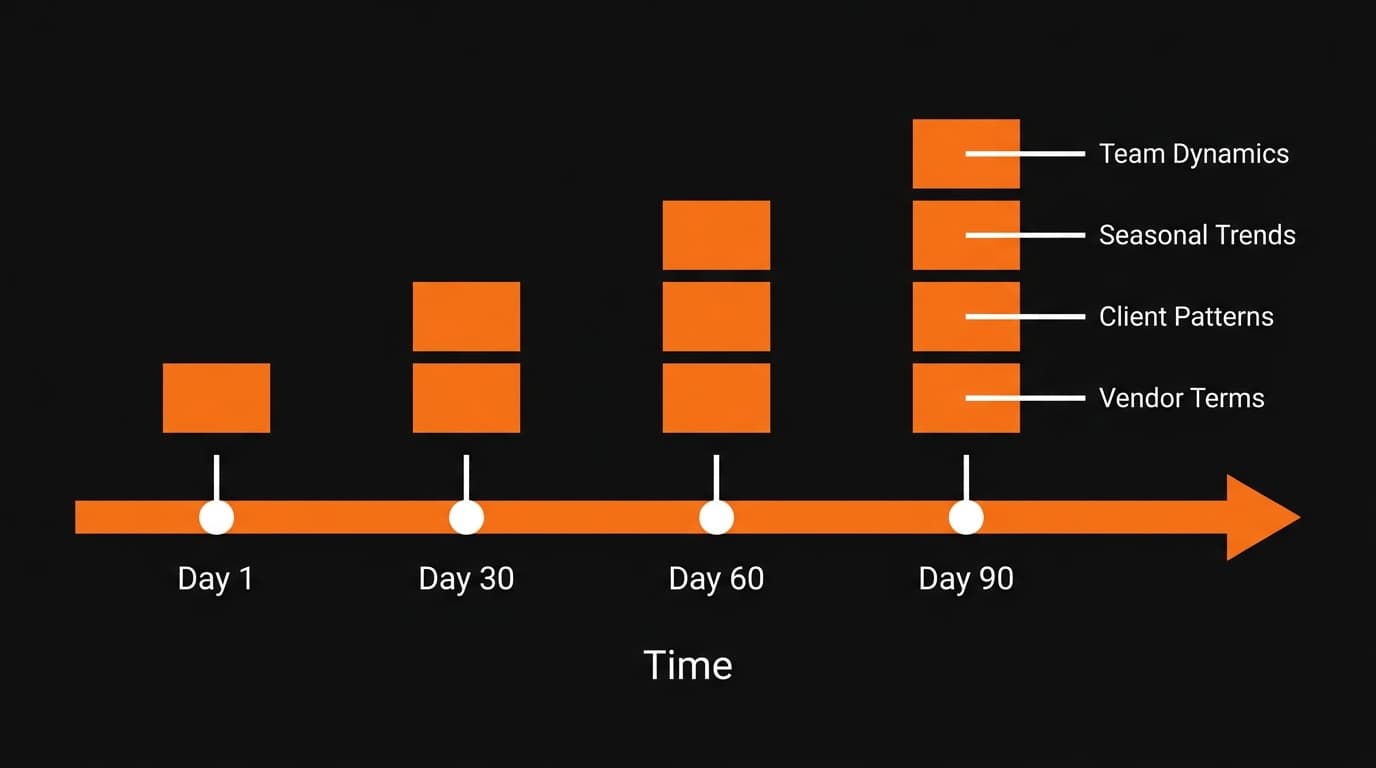
By day 30, your AI Chief of Staff handles drafting, summarizing, routing, and responding. Useful, but not yet remarkable.
Why This Compounds and Why SaaS Tools Don't
Day One vs. Day 90
Day one is productive. The system drafts, summarizes, routes, and responds. It saves time immediately.
Day 90 is different. The system has learned that your top vendor charges 12% more in Q4 and needs three days' notice on orders. Your revenue dips every August. Your team front-loads projects in June to compensate. One specific client always needs a follow-up call before approving anything, and skipping that call costs you the deal.
That knowledge took 90 days to build. It compounds every week after that.
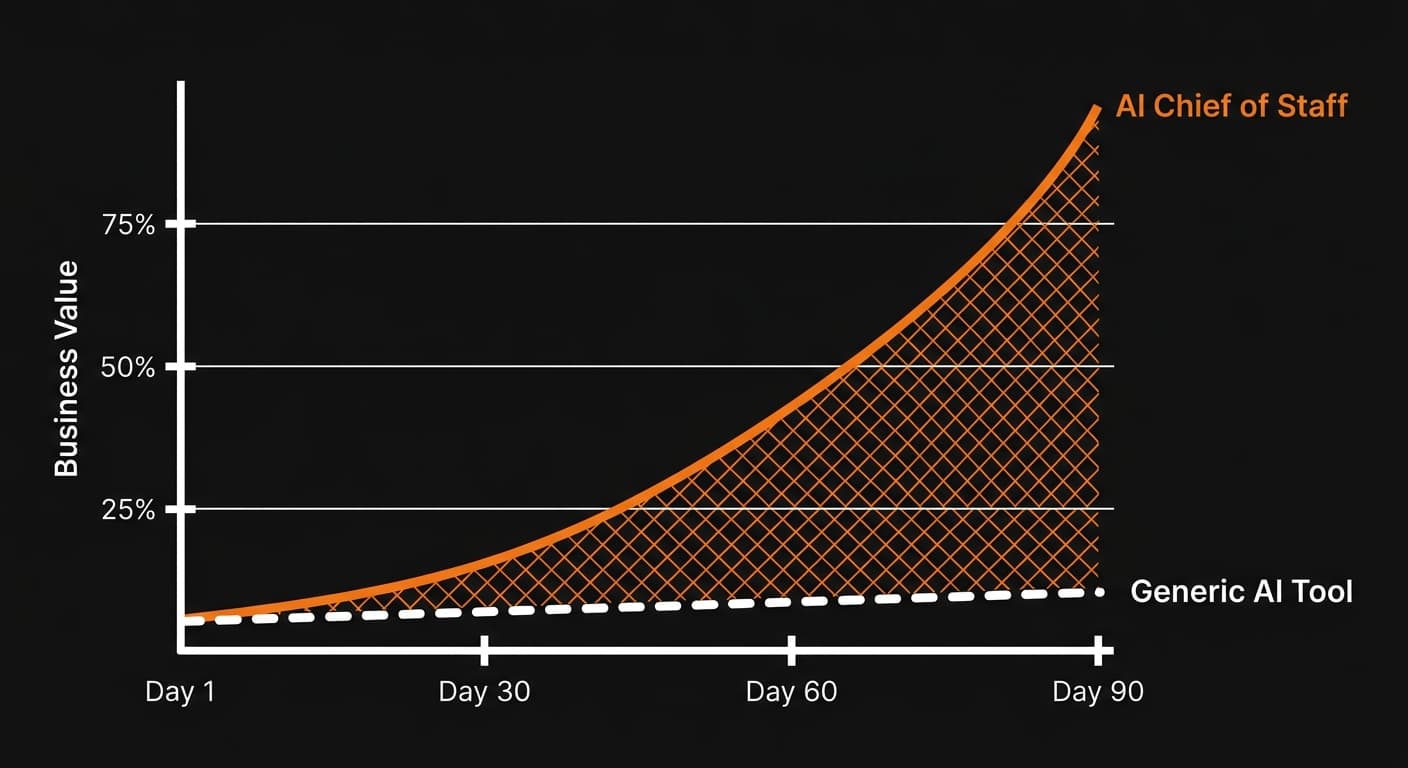
The inputs that drive this: weekly check-in notes, email summaries, decision logs, and your team's answers to structured prompts from the iMakeMVPs system. Your team provides the context. We build the layer that makes it searchable, actionable, and persistent.
Every SaaS Tool Resets at Zero
Subscribe to a $25/month AI writing tool today. Cancel in six months. Everything you built inside it is gone. Worse, if a competitor subscribes to the same tool tomorrow, they start from the exact same baseline you did on day one. There is no moat. The gap closes the moment they log in.
SaaS AI tools are interchangeable by design. Their business model is volume, not your context.
Context Is the Moat, Not the Model
Any competitor can license Claude or GPT-4o for $20 a month. That is not a competitive advantage. What they cannot license is your business context. It took months to build. No competitor can copy it with a credit card.
Free Assessment
Your operation is already generating context worth capturing.
Book a free AI Ops Assessment. We map your workflows and show you exactly what a Day 90 system looks like for your specific business.
Book Your Free AI Ops Assessment →The Hidden Cost of Not Having One
IteratorsHQ (2024) puts a number on the knowledge loss problem: 42% of institutional knowledge exists only inside individual employees' heads. No documentation. No handoff. No backup.
Replacing a $60,000 employee costs roughly $75,000 once you account for recruiting, onboarding, and the productivity hole they leave behind, according to Lano's analysis of Gallup and SHRM data (2024). That figure does not include the institutional knowledge they took with them, or the months your remaining team spends rebuilding context from scratch.
Gallup estimates turnover costs US businesses $1 trillion per year across all industries (Gallup, 2023). Most of that loss is quiet. You do not see it on an invoice. You feel it in slowed decisions, repeated mistakes, and systems that break every time a key person is out.
Fortune 500 companies grew AI governance and operator roles 400 to 600% faster than AI builder roles in 2025, per Draup's Fortune 500 hiring analysis. They are running operations, not pilots. That gap is already measurable. It widens every quarter you delay.
See what closing that gap looks like for a real business.
Who This Is Built For
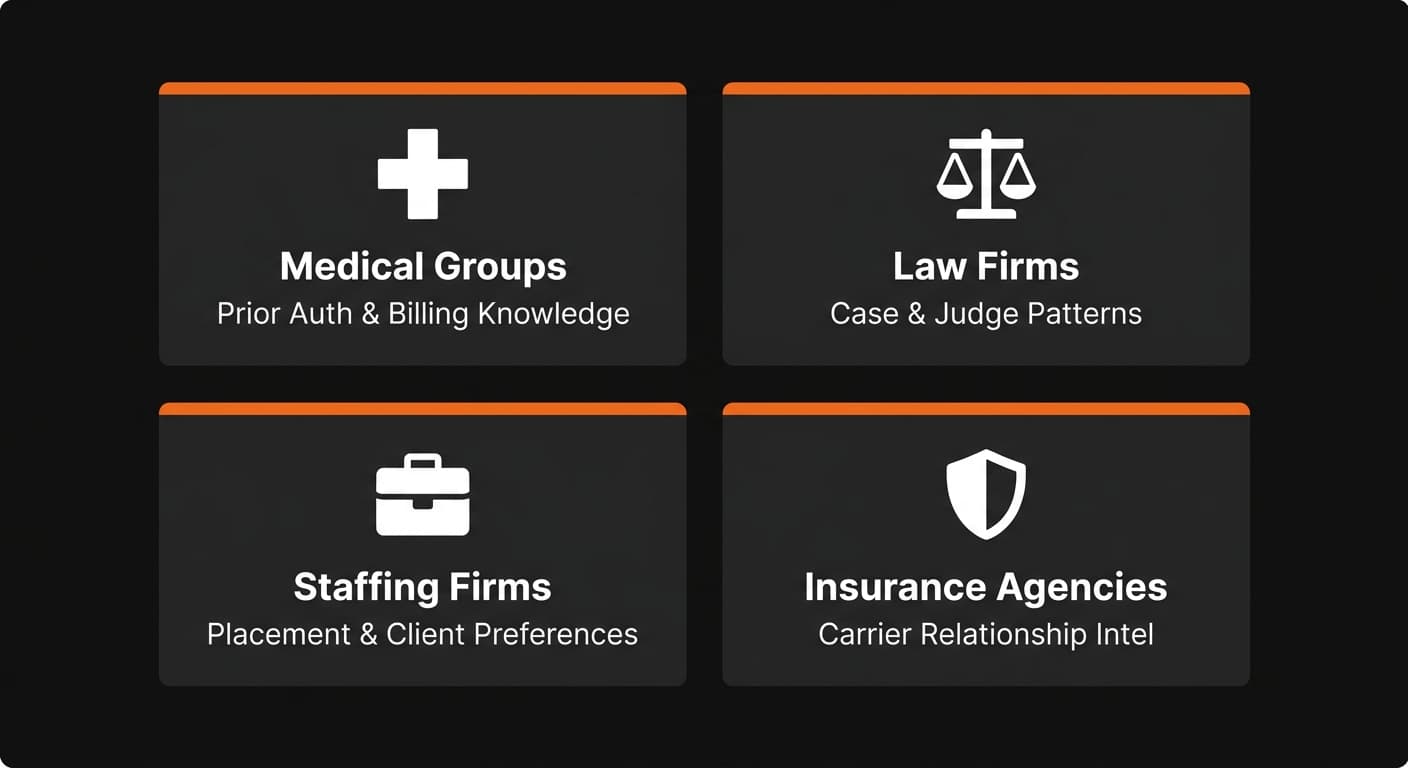
The gap hits hardest in professional services firms where the complexity is real and the headcount is not.
Professional services firms lead all SMB sectors in AI adoption at 30.3%, according to the JPMorgan Chase Institute (2024). The businesses moving fastest are not better funded. They started with a clear picture of where the gaps were. Your AI visibility score is that starting point.
Medical Groups and Healthcare Operators
Prior auth backlogs are not an inconvenience. They are a revenue leak. When billing staff turns over, the institutional knowledge of payer quirks and denial patterns walks out with them. Patient throughput stalls, reimbursements lag, and your highest-paid clinicians spend time on paperwork that should never reach them.
Law Firms and Attorney Practices
Intake processes with no consistent follow-up leak clients before the first consultation. The knowledge of how cases are handled, what language works with which judge, which referral relationships matter: all of it lives in your partners' heads. When one of them leaves, so does the process. Non-billable admin keeps eating the hours that should generate revenue.
Insurance Agencies and Staffing Firms
Consider a 12-person staffing firm placing healthcare workers. Their top recruiter carries every active client preference in her head: which hiring managers respond to calls vs. emails, which facilities pay net-60 vs. net-30, which candidates have declined offers twice and why. When she leaves for a competitor, the firm spends three months rebuilding relationships and relearning placement patterns that should have been in a system from day one.
An AI Chief of Staff captures that context as it is created. When a top producer leaves, the carrier relationship knowledge stays. The placement pattern logic stays. The next recruiter onboards against a real knowledge base, not a blank slate.
Only 18% of SMBs say cost is the barrier to AI adoption. Forty-one percent say they lack an implementation strategy, per White Beard Strategies research (2026). You do not have a budget problem. You have a starting-point problem. If you have already spent money on AI tools and have nothing to show for it, the first step is an AI implementation roadmap that starts with a tool audit, not another subscription.
Frequently Asked Questions
What is an AI Chief of Staff for a business owner?
A dedicated AI operator built into your business from day one. iMakeMVPs builds and runs it for you as a managed service. It tracks decisions, processes, and institutional knowledge specific to your company. This is not a generic chatbot that forgets every session.
How is this different from using ChatGPT or a SaaS AI tool?
SaaS AI tools reset to zero when you cancel. This system accumulates context about your specific business over time. That compounding context is the moat competitors cannot replicate by buying the same software.
How is this different from hiring a human Chief of Staff or a VA?
A human Chief of Staff is expensive and eventually leaves, taking their context with them. A VA executes tasks but does not build a persistent knowledge layer. This managed service builds the context layer itself, so the knowledge stays in the system regardless of staff turnover.
How long before it becomes useful?
Useful on day one for basic ops. By day 90 it knows your vendor relationships, seasonal patterns, team dynamics, and recurring decisions. No SaaS tool will ever know those things without being told each time.
How much does an AI Chief of Staff cost?
Every engagement is custom-built around your operation, so pricing is scoped during the AI Ops Assessment. That is a free call. We map your workflows, find the gaps, and give you a specific roadmap and a clear cost before you commit to anything.
Do I own my data and context if I stop?
Yes. The knowledge base belongs to you. If you end the engagement, you keep the documentation, the structured context, and any outputs the system produced. Your data is not a hostage.
Is this only for large companies?
No. Enterprise adopted AI governance roles first, but the compounding value applies equally to a growing professional services business. The only difference is that the Fortune 500 started earlier.
What types of businesses benefit most?
Professional services firms with complex operations and high staff turnover: medical groups, law firms, insurance agencies, and staffing firms.
Book Your AI Ops Assessment
The gap between businesses with a dedicated AI operator and those without is already showing up in billable hours, response times, and staff retention numbers. The AI Ops Assessment is a free, focused call. We map your operation, find the gaps, and hand you a specific roadmap, whether you hire us or not.
Book Your Free AI Ops Assessment →