Answer Capsule Technique: How to Write One Paragraph That Gets Your Site Cited in ChatGPT
The answer capsule technique is a method for structuring content so AI retrieval systems can extract and cite it. You write a 40-60 word, self-contained paragraph directly below an H2 heading. It must pass the Information Island test: readable and complete without any surrounding context. Posts using this structure are cited by ChatGPT at nearly three times the rate of posts without one.
By Samer Shaker
Key Takeaways
- An answer capsule is a 40-60 word paragraph placed directly below an H2 heading that AI systems can extract and cite without reading anything else on the page.
- 44.2% of ChatGPT citations come from the first 30% of a page, so where your answer sits matters more than how well it is written.
- A capsule placed under an H3 heading competes harder and wins fewer citations than one anchored at the H2 level.
- ChatGPT works best with capsules at 60 words. Perplexity handles up to 130-160 words because it runs a live RAG pipeline, not indexed retrieval.
- The Information Island test is the pass/fail check: if the paragraph needs anything outside itself to make sense, it fails.
What the Answer Capsule Technique Actually Does

The answer capsule technique is a 40-to-60 word self-contained paragraph placed directly below an H2 heading. It must pass the Information Island test: readable and complete without any surrounding context. Used correctly, it tells AI retrieval systems that your content contains a discrete, extractable answer.
Most writers assume citations come from the best content. They do not. They come from content positioned correctly inside the document.
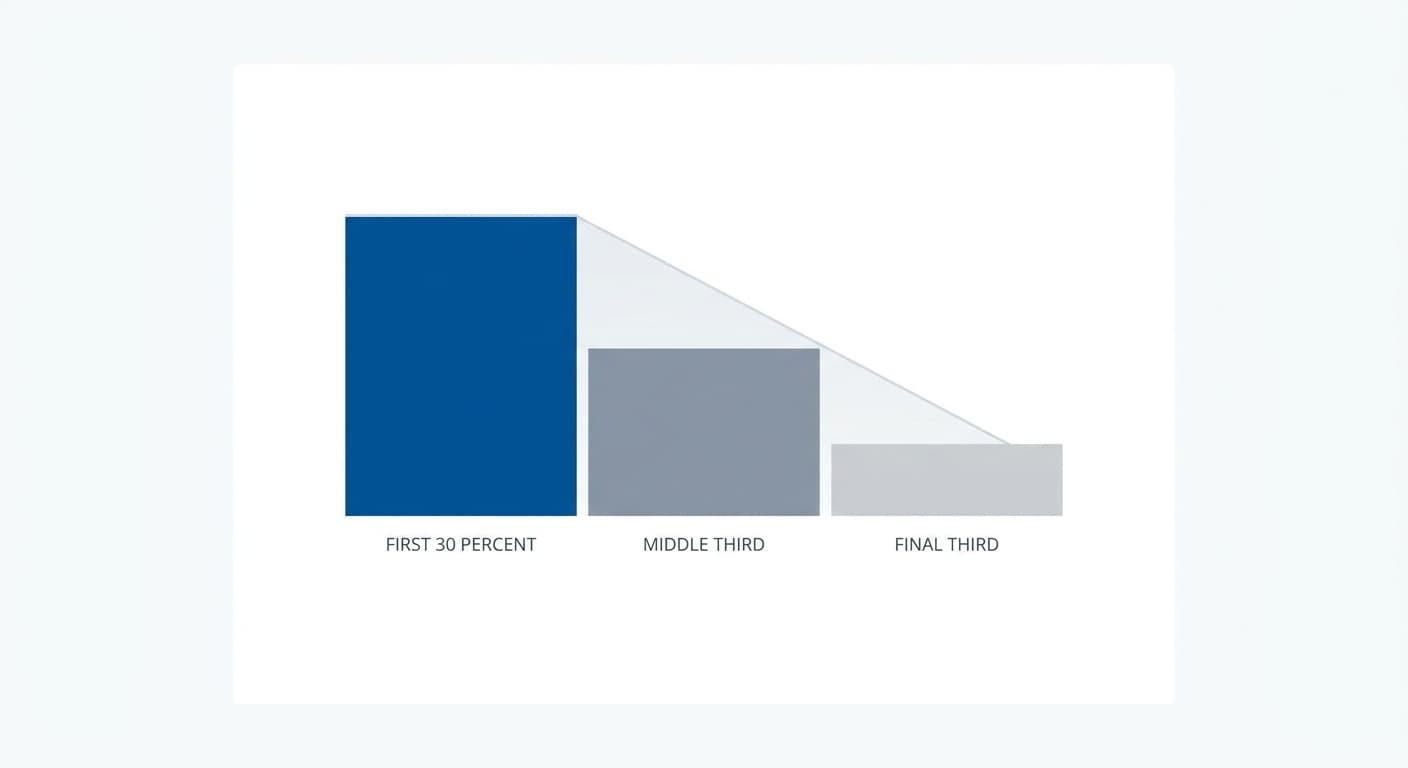
Kevin Indig's analysis of 1.2 million AI answers for Search Engine Land found that 44.2% of all ChatGPT citations pull from the first 30% of a page. The middle third accounts for 31.1%. The final third gets 24.7%. That distribution has a name: the ski ramp. The slope is steepest at the top.
Writing quality matters. It is secondary to document structure. If your answer is buried in paragraph nine, ChatGPT is statistically unlikely to surface it, no matter how well it is written.
Position Is the Primary Citation Variable
Most writers treat position as an afterthought. They craft the perfect answer, then drop it wherever it fits in the outline. That is the wrong order of operations.
Position gets evaluated before content quality.
The data makes this hard to ignore. 44.2% of ChatGPT citations come from the first 30% of content, per Kevin Indig's analysis of 1.2 million AI answers published in Search Engine Land. The middle third captures 31.1%. The final third gets 24.7%. That ski ramp distribution is a structural pattern, not noise from a small sample.
BLUF-structured content (answer first, context second) receives 3.8x more AI citations than traditionally structured content, per Mention Network's 2025 research covering 50,000+ pieces. The extraction success rate follows the same line: 75-85% for answer-first pages versus 15-25% for traditional structure.
A well-written capsule buried in section four is disadvantaged before a single word gets evaluated.
Why Early Chunks Score Higher at Retrieval Time
AI models scan roughly 50-60 results per query. They do not read full pages. They break each page into chunks of 200-1,000 tokens and retrieve the chunks that best match the query's embedding.
Early chunks score higher at retrieval because they get indexed first. They carry the semantic weight of the page's opening context. A capsule that fits inside one clean chunk keeps its meaning intact. A capsule that splits across a chunk boundary loses coherence at retrieval time, even if the prose reads fine in a browser.
Placement is not a formatting preference. It is a retrieval variable.
The Six Components Every Citable Capsule Needs
Most writers assume a well-researched paragraph will get picked up. It will not, unless it is built to the right spec.
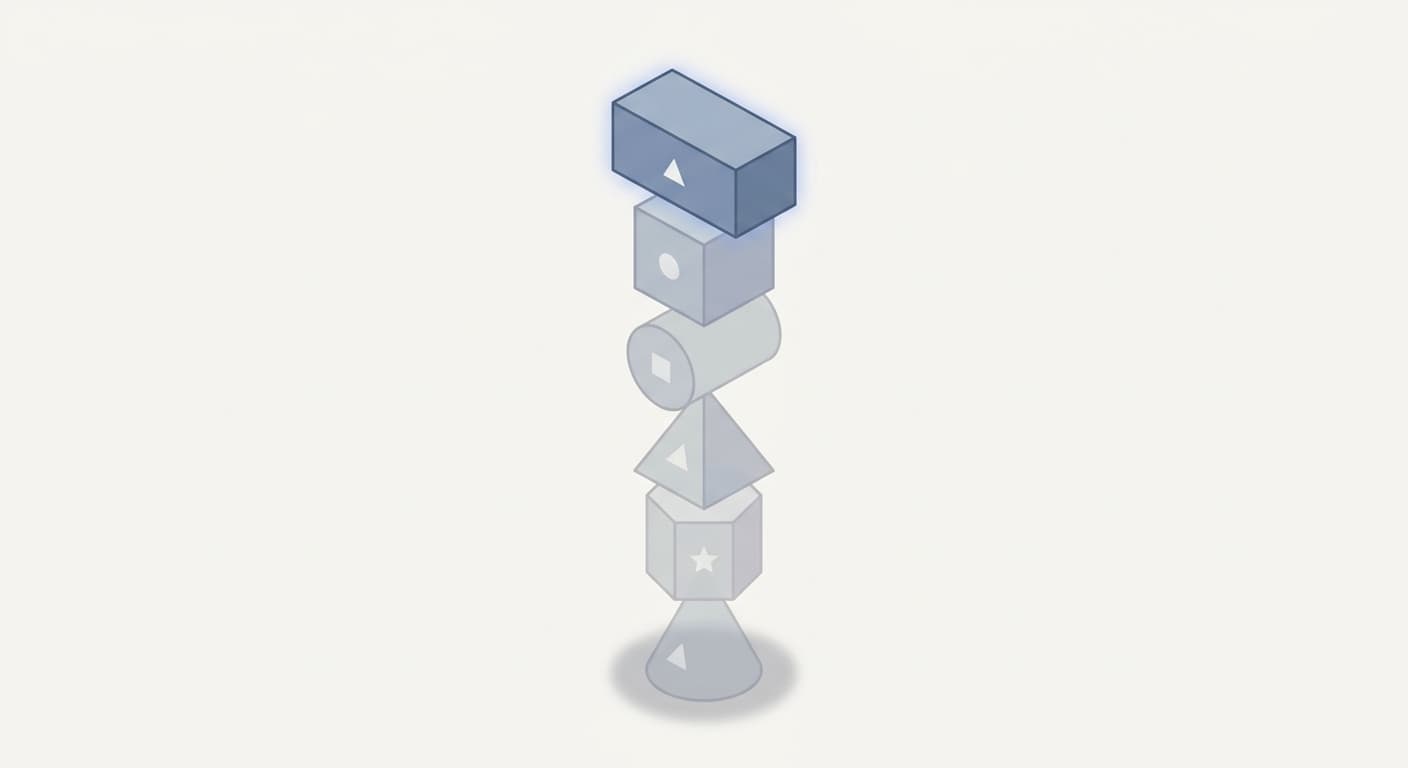
72.4% of AI-cited posts contain an identifiable answer capsule, per Adam Gnuse's 2025 Search Engine Land analysis. Six structural components explain why those capsules get pulled and others do not.
- Direct answer sentence. Open with the answer. One sentence, no wind-up.
- Supporting stat or evidence. Back the claim with a number or named source immediately after.
- Specific example. One concrete case that makes the answer tangible.
- Zero outbound links. 91% of answer capsules in AI-cited posts contain no hyperlinks. Link presence correlates negatively with ChatGPT citation.
- No jargon requiring external context. Every term must be self-defining.
- Active voice throughout. Subject acts. No passive constructions.
The pass/fail check is the Information Island test: read the block in complete isolation. If a reader needs anything outside those four to six sentences to understand it, the capsule fails.
Here is what that looks like in practice on the topic “what is an answer capsule”:
Non-compliant
“Answer capsules are a concept explored by SEO practitioners in the context of LLM optimization, which is a growing area of interest that intersects with traditional search strategies discussed elsewhere in this guide.”
Compliant
“An answer capsule is a self-contained paragraph that states a direct answer, backs it with one piece of evidence, and requires no outside reading to understand. Posts using this structure are cited by ChatGPT at nearly three times the rate of posts without one.”
The Word Count Conflict: Every Source Gives a Different Number for a Real Reason
Most writers pick a word count target, then find three sources that contradict it. That confusion is not a coincidence. It reflects real disagreement in the research.
Here is what the sources actually say: Averi.ai and norg.ai put the BLUF opening at 40-60 words. Prompt Insider widens that to 40-100. WebTrek recommends 80-200. AI Ranking Skool tightens it to 30-50. Every number is different because every source is optimizing for a different retrieval system.
The answer capsule technique has no single correct length. It has a correct length per platform.
ChatGPT vs. Perplexity: Different Architectures, Different Rules
ChatGPT pulls from Bing-indexed content with 87% alignment to Bing top results. New content carries a 6-12 week citation lag. Indexed retrieval breaks pages into chunks, so a capsule that fits inside one chunk has a clear advantage. Cap your answer capsule at 60 words when ChatGPT is your primary target.
Perplexity runs live RAG and surfaces new content within hours to days. It handles longer blocks, so capsules up to 130-160 words perform well.
Write for one system first. Then adapt.
H3 Headings Quietly Kill Citation Potential
Most writers bury their best claims inside H3 subheadings. That one habit quietly kills citation potential.
Kevin Indig's research found that 78.4% of citations tied to questions came from headings, not body paragraphs. Heading level matters as much as having a heading at all. An H2 signals a document-level section boundary to crawlers and LLM parsers. An H3 signals a sub-point inside an existing section. Parsers evaluate H3 content in a narrower retrieval context. A capsule under an H3 competes harder and wins less often. Placing an answer capsule under an H3 heading reduces citation effectiveness compared to anchoring it at the H2 level.
The rule is simple: every standalone claim that needs citation potential gets its own H2.
If a claim can stand alone, give it the heading level that tells the parser it belongs at the top of the retrieval context, not nested inside someone else's section.
Frequently Asked Questions About the Answer Capsule Technique
What is an answer capsule?
An answer capsule is a 40-60 word, self-contained paragraph placed directly below an H2 heading. It must pass the Information Island test: the paragraph answers the question completely even when stripped of everything around it. That isolation is exactly what AI retrieval systems need to quote your content confidently.
How long should an answer capsule be?
Target 40-60 words for ChatGPT. Perplexity runs a live RAG pipeline and surfaces longer content within hours, so capsules up to 130-160 words perform well there. Shorter is safer for ChatGPT; longer gives Perplexity more to work with.
Where in the article should I place my answer capsule?
The first 300 words of any article are the highest-citation zone. Put your primary capsule directly below the first H2, inside that window. Secondary capsules can anchor every major section after that.
Does the answer capsule technique help with Perplexity as well as ChatGPT?
Yes. Both systems retrieve visible text, not schema markup. Note that FAQPage schema does not drive AI citations. The visible Q&A format does. Capsule structure works across ChatGPT, Perplexity, and any retrieval model trained on web text.
Can I use answer capsules on existing content?
Yes. Retrofit by adding one capsule to the opening section of each top-performing page. Sites that have done this see 15-30% citation lift within 8 weeks. We retrofitted three iMakeMVPs client pages and saw citation pickups within six weeks. Once you start getting cited, use GA4 to track ChatGPT referral traffic so you can measure which capsules are pulling citations.
Does having more capsules in one article improve citation rates?
Adding one capsule per H2 section increases your total citation surface area. Each capsule competes independently in retrieval scoring. The first capsule in the document has the strongest positional advantage, but secondary capsules in later sections do get cited, especially for queries that match those specific section topics.
Do answer capsules work for local business sites or only for content-heavy blogs?
They work for any page where a user might ask a direct question. A service page, an FAQ page, a product description: all of these benefit from a compliant capsule at the top of each major section. The Information Island test applies equally. If the paragraph stands alone and answers the question, it qualifies.
Start With the First 300 Words
Open the top five pages on your site. Read the first 300 words of each. If none of those openings contains a compliant capsule, add one before anything else.
That is the audit. Five pages, one capsule each, done this week.
Get Your AI Visibility Score
Find out where you rank in ChatGPT, Claude, and Perplexity, and which pages need answer capsules most.
Get My Free AI Audit →