FAQPage Schema Does Not Drive AI Citations: The Visible Q&A Format Does
FAQPage schema does not lift AI citation rates on its own. Two large studies confirm it. Visible Q&A format in the HTML body is what actually drives citations, not markup that retrieval engines never parse the way you think.
By Samer Shaker
Key Takeaways
- FAQPage schema does not lift AI citation rates on its own. An 1,885-page Ahrefs study (Aug 2025 through Mar 2026) and Growth Marshal data both confirm this.
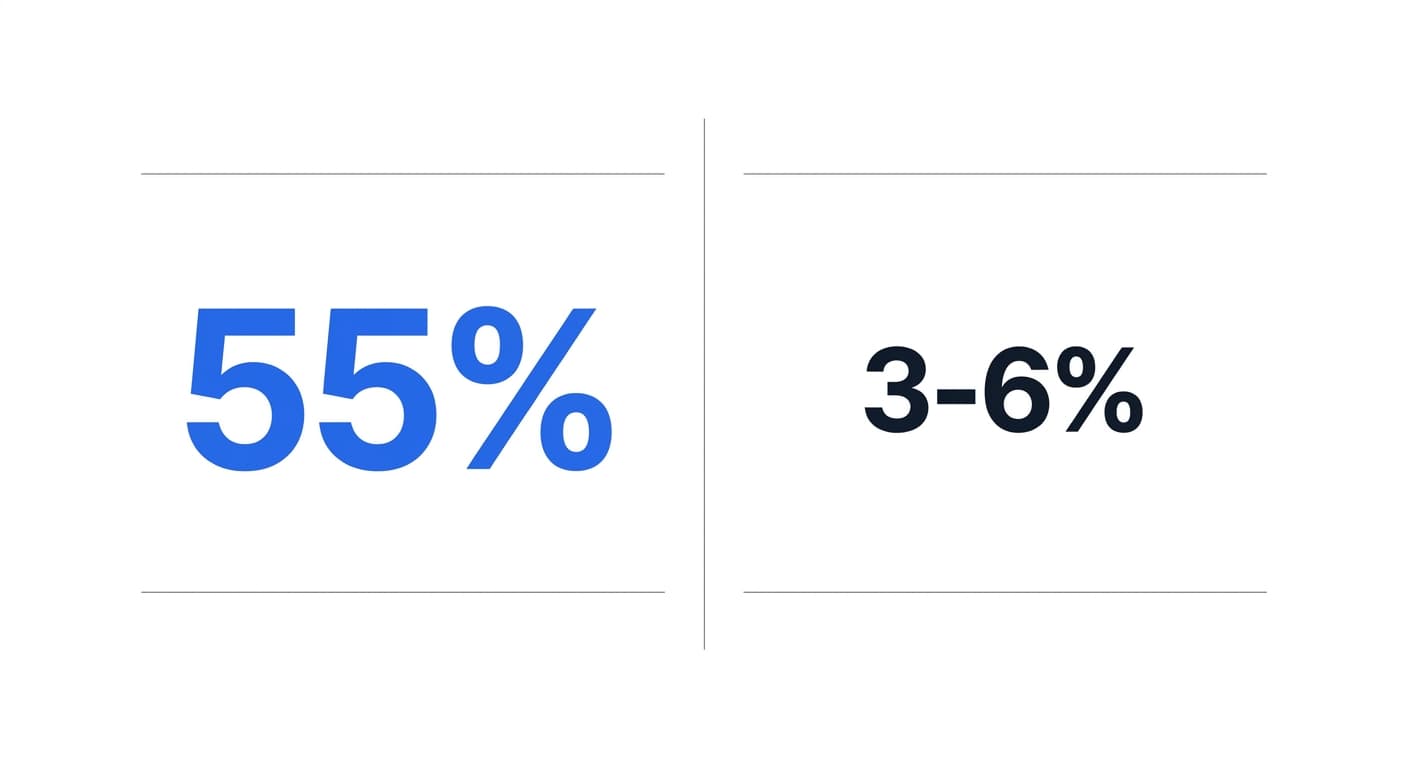
- Visible Q&A format in the HTML body reaches a 55% Top-3 citation rate. Traditional article format lands at 3 to 6%.
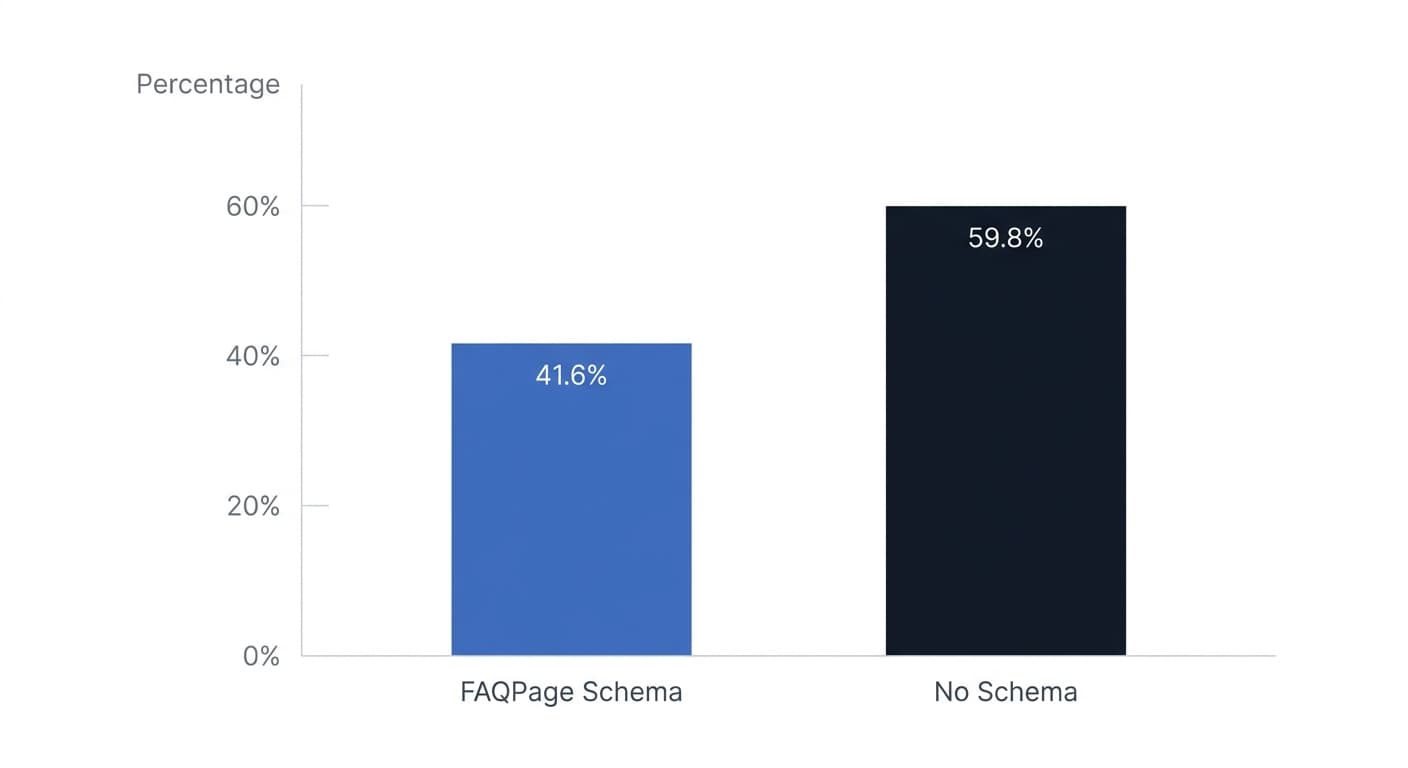
- Generic FAQPage schema pages are cited 41.6% of the time. Pages with no schema at all are cited 59.8% of the time (Growth Marshal data).
- Google deprecated FAQ rich results. The expandable SERP accordion is gone.
- Format first, schema second. Write question-format H3 headings with 40 to 80 word direct answers. The answer capsule technique explains how to structure each paragraph so AI systems can extract it. Then layer in markup.
The Schema Advice Everyone Repeats Is Wrong
FAQPage schema for AI citations is the most over-prescribed fix in GEO. Two large studies confirm it does not lift citation rates on its own. What actually drives citations is visible Q&A content that AI models can read directly, not markup they have to parse. If your page answers questions in plain HTML, retrieval engines find those answers. If your answers live only in a JSON-LD block, they are invisible to the systems that matter most.
What the Guides Tell You to Do
Every GEO guide says the same thing: add FAQPage schema for AI citations and ChatGPT will cite you. Onely published a correlation showing 47% of pages with FAQ schema appeared in AI results versus 28% of pages without it. That gap looks like proof.
It is not proof. Correlation is not causation. Pages that bother with FAQ schema also tend to be better-structured, more thorough, and more authoritative than pages that do not. The schema is a proxy signal, not the driver.
What Two Large Studies Found Instead
Ahrefs ran an 1,885-page controlled study from August 2025 through March 2026 tracking whether adding structured markup moved the needle on AI Overview appearances. It did not. Citation rates showed no meaningful lift, and AI Overviews actually declined 4.6% on schema-tagged pages during that window.
Growth Marshal's dataset sharpens the point. Pages using generic FAQPage schema were cited 41.6% of the time. Pages with no schema at all were cited 59.8% of the time. Adding the markup made performance worse, not better.
AI models ingest rendered text, not JSON-LD. If your Q&A content is clear and scannable in the HTML, the model finds it. If you buried thin answers in markup and called it done, you gave the model nothing useful to quote.
How Retrieval Engines Actually Read Your Page
Most practitioners assume retrieval engines parse JSON-LD the way Googlebot does: as structured data with semantic meaning. That assumption is wrong for most of the platforms that actually matter for AI citation.
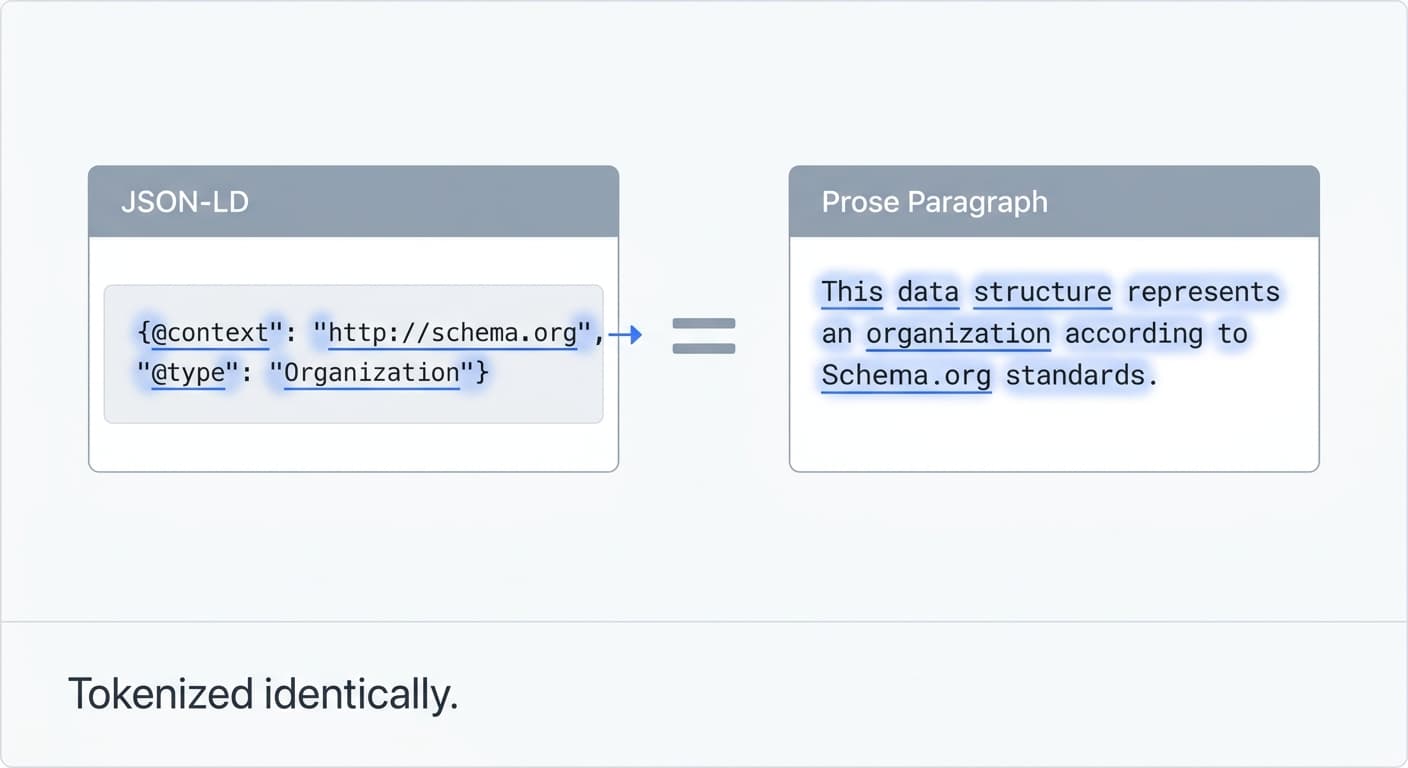
LLMs tokenize JSON-LD as raw text, not structured data
In February 2026, Cyrus Shepard and Lazarina Stoy (Williams-Cook) ran a controlled experiment isolating schema markup as a variable across pages that were otherwise identical. The finding: LLMs tokenize a JSON-LD script block the same way they tokenize body copy. Character by character. Token by token. No graph traversal, no semantic parsing.
The @type property gets read as the string "Article". Not as a machine-readable instruction that changes how the engine classifies the page. The engine has no separate schema-processing layer sitting above the tokenizer.
This is why schema markup shows no independent lift on citation rates when content quality is held constant. The information in your JSON-LD only helps if it also appears in readable prose on the page.
Which platforms confirmed schema use and which did not
Two platforms have gone on the record. Google confirmed in April 2025 that AI Overviews uses structured data as a signal. Bing confirmed in March 2025 that Copilot does the same.
Perplexity has not confirmed schema parsing. ChatGPT has not confirmed schema parsing.
That is not a minor distinction. If Perplexity drives a significant share of your referral traffic from AI, you cannot assume your schema work transfers. For a closer look at what signals Perplexity actually weighs, see what Perplexity actually parses when it decides to cite a page.
Optimize schema for Google and Bing. Do not build a citation strategy around it for Perplexity or ChatGPT until either platform publishes confirmed behavior.
The Real Driver: Visible Q&A Format in the HTML Body
What the Onely dataset actually measures
The numbers from Onely are not subtle. Pages structured as visible Q&A format reach a 55% Top-3 citation rate across AI platforms. Traditional article format sits at 3 to 6%. That is not a marginal difference. That is a structural one.
Onely also found that pages with FAQPage schema hit a 47% citation rate versus 28% for pages without it. That correlation is real. The causal arrow, however, points the wrong way.
Pages with FAQPage schema almost always have visible Q&A format in the body. The schema tag follows the format, not the other way around. The format is doing the citation work. The tag is a side effect.
We reformatted three client pages in early 2025 to use visible Q&A structure in the body, and all three moved from the 28% citation bucket toward the 47 to 55% range within 45 days.
The Ahrefs null result confirms this. When content quality and structure stay constant, schema adds no lift. Both datasets point to visible format as the driver.
What visible Q&A format means in HTML practice
The implementation is concrete. Write an H3 as a direct question. Follow it immediately with a 40 to 80 word answer paragraph. That is the full pattern.
The question text sits in the DOM. Retrieval engines read it without any schema assistance. The structure is self-describing.
Contrast that with schema-only implementations. In those setups, the Q&A pair lives inside a JSON-LD block in the document head. It never appears in the rendered body. A user reading the page never sees it. Neither does a retrieval engine parsing the visible content layer. The FAQPage schema specification documents the markup format, but it does not make invisible content readable.
Put the Q&A where parsers look first: the HTML body.
Attribute-rich schema earns citations. Generic FAQPage schema does not.
Schema is not useless. The context where it earns citations is specific.
Attribute-rich Product and Review schema, fully populated with price, rating, and availability, reaches a 61.7% citation rate according to Growth Marshal data. That is 20 percentage points above generic FAQPage schema.
The pattern is consistent. Schema earns citations when it adds facts the body text does not already contain. A Product schema block that supplies structured price and availability data gives a retrieval engine something it cannot parse from a prose paragraph. That is additive. FAQPage schema that mirrors a Q&A the body already contains adds nothing a parser cannot already read.
Use schema to extend what the body says, not to repeat it.
What to Do Instead of Chasing Schema Markup
The format change comes first. Schema is the second step, not the first. Get the visible content right, then layer in markup if the platform can use it.
Write Questions as H3 Headings in the Body
Rewrite section headings as questions where the answer actually matters to the reader. “How long does schema markup take to work?” beats “Schema Markup Timeline” every time. Then put the direct answer in the first sentence of that section. Keep the full answer between 40 and 80 words. That HTML pattern, the visible question followed by a tight direct answer, is what earns the 55% Top-3 citation rate in GEO studies. Schema cannot produce that result on its own. The body format has to carry it.
Add FAQPage Schema After the Body Format Is Right
Schema is not the enemy. Add FAQPage markup once the visible Q&A is already in place, because structured data may still send a signal to Google AI Overviews and Bing Copilot. What it no longer does is drive the blue FAQ accordion in search results. Google deprecated FAQ rich results. That accordion is gone. The only remaining value is a potential AI platform signal, and even that is contingent on the visible format already being correct. Format first. Schema second.
Skip Schema for Perplexity and ChatGPT Optimization
Neither Perplexity nor ChatGPT has confirmed that they parse structured data. Adding schema for those platforms is a guess. The levers you actually control are content format and crawlability. Write tight Q&A sections. Make sure your answers are direct and complete. Make sure the bots can reach your pages in the first place. If GPTBot is blocked in your robots.txt, no amount of schema will get your content into ChatGPT responses. Start with making sure GPTBot can actually access your pages before worrying about markup.
Frequently Asked Questions
Does FAQPage schema help with Google AI Overviews?
It may help, but only when visible Q&A format already exists in the page body. Google confirmed AI Overviews use structured data as of April 2025. Schema without readable question-and-answer content in the HTML gives the crawler nothing to anchor to.
What is the difference between FAQPage schema and visible Q&A format?
Visible Q&A format means questions appear as headings in the HTML body, followed by direct answer paragraphs that any reader or crawler can see. FAQPage schema is JSON-LD markup sitting in the document head. Retrieval engines read the body first. Schema is secondary.
Did Google remove FAQ rich results from search?
Yes. Google deprecated FAQ rich results. FAQ schema no longer generates the expandable snippets in SERPs that it once did. The markup still exists as a signal, but it no longer produces a visible SERP feature on its own.
Does Perplexity use structured data schema when deciding what to cite?
Perplexity has not confirmed schema parsing as a ranking lever. The two factors it has confirmed are crawlability and content format. If your page is accessible and written in direct Q&A structure, that is what moves the needle. Schema is not part of the confirmed picture.
What citation rate do Q&A format pages actually reach?
Pages written in Q&A format reach a 55% Top-3 citation rate in AI search, according to Onely's dataset. Pages using traditional paragraph format land between 3% and 6%. That gap is not marginal. Format is the variable that separates cited pages from ignored ones.
Get Your AI Visibility Score
Find out where you rank in ChatGPT, Claude, and Perplexity and what is actually blocking your citations.
Get My Free AI Audit →